
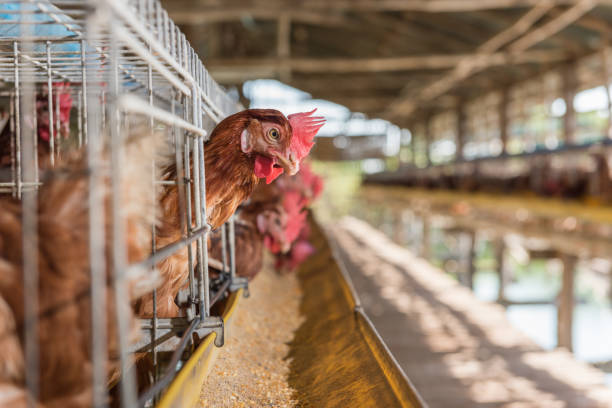
Poultry Farming Cages for 60,000 Birds in Tanzania
Poultry Farming Cages for 60,000 Birds in Tanzania
Setting up a poultry farm for 60,000 birds in Tanzania is no small task — it requires smart planning, quality equipment, and long-term thinking. Whether you’re raising layers for eggs or broilers for meat, the success of your operation hinges largely on one critical factor: the right poultry housing system. In recent years, modern cage systems have become the go-to solution for commercial farmers across East Africa, especially in countries like Tanzania where demand for poultry products is growing fast. At Livi Machinery, we’ve helped dozens of large-scale farms in Tanzania set up efficient, durable, and fully automated cage systems designed for 60,000-bird operations — and we know exactly what it takes to make such a project succeed.
If you’re eyeing this scale of farming, this article will guide you through everything you need to consider — from cage design and layout to automation, cost-efficiency, and after-sales support.
Choosing the Right Cage System for Large-Scale Production
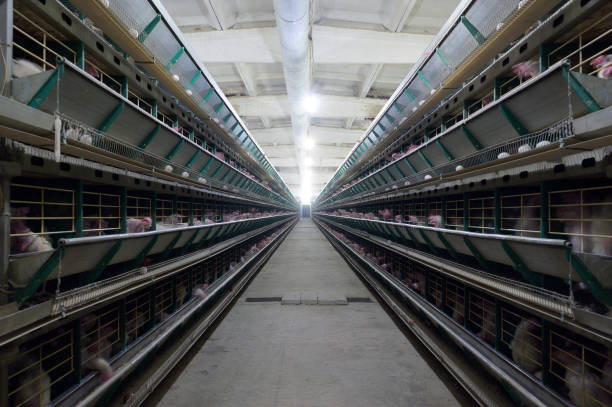
When dealing with a flock size of 60,000 birds, standard backyard setups won’t cut it. You need a system that maximizes space, minimizes labor, and supports bird health and productivity. The most effective option? Layered poultry cages — specifically A-frame or battery cage systems. These are engineered for high-density housing without compromising animal welfare or airflow.
For egg-laying hens, our three-tier or four-tier layer cages are ideal. They allow up to 16–18 birds per square meter while ensuring each hen has enough room to move, feed, and lay comfortably. We often recommend galvanized steel construction for Tanzanian farms because it resists rust, handles humidity well, and lasts over 15 years — even in tropical climates.
If you’re raising broilers (meat chickens), the setup is slightly different. Broiler cages are wider and lower, designed for faster growth cycles (usually 5–7 weeks). But honestly, many Tanzanian farmers at this scale still prefer floor rearing for broilers due to ventilation and leg health concerns. However, if you’re tight on space or want better disease control, elevated slatted cages can work — especially when paired with proper bedding management and climate control.
No matter which path you take, the layout matters. For 60,000 birds, you’ll likely need between 3 to 4 house units, each holding 15,000–20,000 birds. This modular approach helps manage biosecurity, reduces risk during outbreaks, and makes day-to-day operations more manageable. At Livi, we use CAD modeling to help clients visualize their layout before production even begins — so you know exactly how every bird, feeder, and water line fits.
Automation: The Secret Sauce Behind Profitable Farms
Let’s be real — managing 60,000 birds manually isn’t sustainable. It’s physically exhausting, prone to error, and simply not profitable in the long run. That’s why we strongly recommend full automation, especially for farms of this size. Automation doesn’t just save labor; it increases consistency, improves feed conversion ratios, and ultimately boosts your bottom line.
Start with automatic feeding systems. Chain-and-silo setups can deliver feed evenly across all cages without human intervention. One worker can manage feeding for the entire flock in under an hour. Pair this with automatic nipple drinkers — they reduce water waste by up to 70% and keep litter drier, cutting down on ammonia buildup and footpad issues.
Egg collection is another area where automation shines. Our automatic egg belts gently carry laid eggs to a central collection table, reducing breakage and saving hours of manual gathering every day. On a 60,000-layer farm, that could mean collecting over 50,000 eggs daily — doing that by hand would require a small army.
Don’t forget manure removal. Built-in conveyor belts or scraper systems remove droppings automatically, improving air quality and reducing insect infestations. This also means less labor and better compliance with environmental standards.
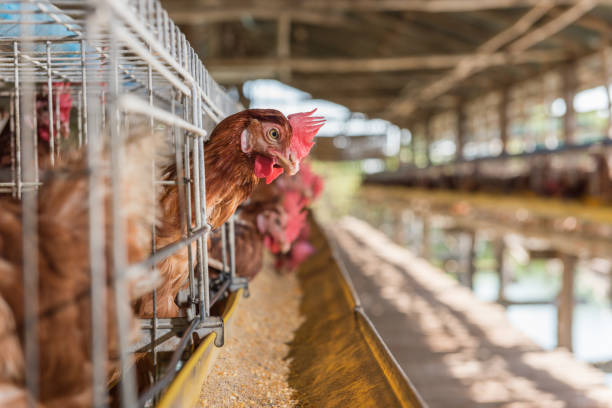
And yes — all of this can run on solar power if needed. Many of our Tanzanian customers integrate solar panels with backup batteries to ensure uninterrupted operation during load-shedding or rural power outages. With remote monitoring via smartphone apps, you can check temperature, feed levels, or egg output from anywhere.
End-to-End Support: From Design to Delivery and Beyond
One thing we’ve learned after serving African markets for over a decade: equipment alone isn’t enough. Farmers need real support — from the first sketch to the final installation. That’s why Livi offers full turnkey solutions tailored to local conditions.
We start by understanding your goals, land layout, budget, and local climate. Then we design a customized cage system that fits your shed dimensions and future expansion plans. Our engineers make sure everything complies with practical realities — like available truck sizes for transport, local voltage standards, and ease of assembly.
Once approved, we manufacture all components in Zhengzhou using high-grade materials. Each batch is hot-dip galvanized after welding for maximum durability. Then we flat-pack everything for shipping — cages, feeders, water lines, motors, belts — all neatly labeled and crated to survive ocean freight to Dar es Salaam or Mombasa ports.
Upon arrival, our team can dispatch experienced technicians to supervise installation and train your staff. We don’t just drop off containers and leave — we stay until your system runs smoothly. Plus, we provide spare parts kits and ongoing WhatsApp/email support. Need a replacement gear motor in Mbeya? We’ll ship it in days.
Over the years, we’ve seen too many farmers buy cheap foreign equipment only to get stuck later with broken parts and no technical help. With Livi, you’re not just buying cages — you’re gaining a long-term partner invested in your farm’s success.
Ready to Build Your 60,000-Bird Poultry Dream? Let’s Talk
Starting a big poultry venture is exciting — but it’s also a major investment. You want systems that last, perform well, and pay off quickly. At Livi, we’ve built systems just like this for farms in Arusha, Dodoma, and Morogoro — and they’re running strong today.
If you’re serious about launching or upgrading a 60,000-bird operation, we’d love to walk you through a free consultation. Share your farm plans, site photos, or rough sketches — and we’ll send you a detailed proposal with layout options, pricing, and timelines. No pressure, just clear, practical advice.
Drop us a message at [email protected] or call/WhatsApp +86 135 2600 9876. Let’s turn your vision into reality — one healthy, productive bird at a time.