
Poultry Production Solutions in Ghana | Livi Machinery
Poultry Production Solutions in Ghana | Livi Machinery
Ghana’s poultry sector is growing fast — and for good reason. With rising urban populations, increasing protein demand, and strong government support through initiatives like the Planting for Food and Jobs programme, more farmers across Accra, Kumasi, Tamale and rural districts are stepping into commercial chicken farming. But growth brings challenges: inconsistent hatch rates, high mortality in brooding phases, inefficient feed conversion, cage rust in humid coastal climates, and outdated manual management practices. That’s where Livi Machinery steps in — not as just another equipment supplier, but as a long-term partner committed to making Ghanaian poultry farms more profitable, scalable and sustainable.
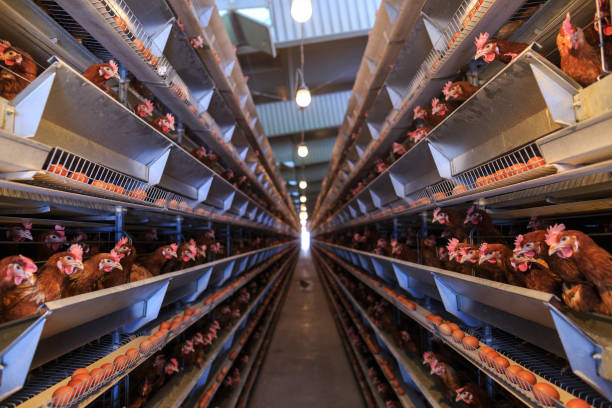
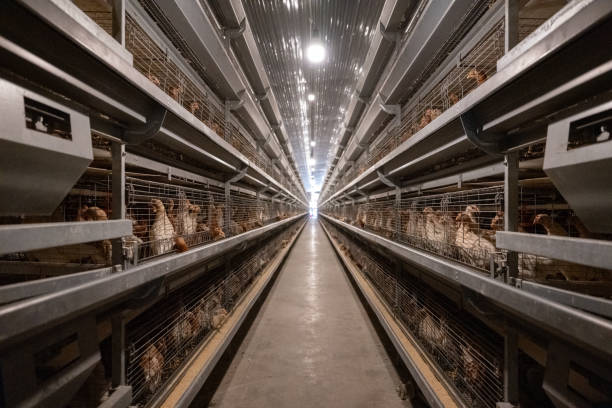
We’ve been designing and delivering poultry production solutions since 2012 — and over the past five years, we’ve worked closely with over 37 farms across Ghana, from smallholder cooperatives in Ashanti Region to integrated commercial units near Tema Harbour. Our systems aren’t shipped off-the-shelf and forgotten. Every installation is adapted to local realities: heavy-duty galvanized steel coatings to withstand Ghana’s high humidity and salty air, adjustable tier heights to suit varying worker heights and management styles, and modular designs that grow with your operation — whether you start with 500 birds or scale to 20,000.
Why Local Adaptation Matters More Than Ever
Let’s talk honestly: not all chicken cages work well in Ghana. Some imported systems corrode within months near the coast. Others are built for European cold-storage barns — not tropical open-sided sheds with natural ventilation. At Livi, our Ghana-specific engineering starts long before manufacturing. We study local climate data, consult with extension officers from MOFA, and visit farms ourselves — from the humid Western Region to the drier Upper East. That’s how we know why a 120-micron hot-dip galvanization layer is non-negotiable (standard zinc coating wears off in 6–9 months here), why sloped tray angles on layer cages need to be precisely 12° (not 8° or 15°) to ensure smooth egg roll even during morning dew, and why ventilated feed troughs reduce spoilage when ambient temps reach 35°C in March. It’s not about “one-size-fits-all.” It’s about knowing that a farmer in Bolgatanga may need solar-compatible automation add-ons, while a large-scale layer farm outside Cape Coast benefits most from gravity-fed water lines paired with stainless-steel nipple drinkers proven to resist algae build-up in stagnant reservoirs.
Our Full-Flow Support From Ground to Flock
We don’t hand you a cage and disappear. From day one, our support flows across every stage of your journey:
✅ Site evaluation — free virtual or on-site assessment to analyse your topography, access roads, power availability, drainage, and prevailing wind direction — because airflow isn’t optional, it’s foundational.
✅ Layout & technical planning — custom barn blueprints with 3D visualisations, stocking density recommendations aligned with Ghana EPA guidelines, and energy-efficient layout options (including passive cooling zones and rainwater harvesting integration).
✅ Equipment selection — no upselling. Just honest advice: if your target is 5,000 layers, we’ll recommend our mid-tier HD-300 series; if you’re launching a hatchery incubation unit serving northern districts, we’ll suggest our dual-zone, humidity-stable incubators with GSM alert systems. All units are CE-certified and fully compatible with Ghana’s 230V/50Hz grid (with optional surge protection included).
✅ Installation & training — our certified field engineers travel to Ghana twice per quarter. They set up your entire system, calibrate sensors, test feed/water delivery, and train your team — not just the owner — in daily operation, basic maintenance, and early fault recognition. We even leave behind bilingual (English–Twi or Ewe) quick-reference manuals printed on waterproof paper.
✅ After-sales care — spare parts stocked in our regional hub in Tema, WhatsApp-based troubleshooting within 4 hours, and annual health-check visits included in all Platinum and Gold packages.
Real Results from Real Farms Across Ghana
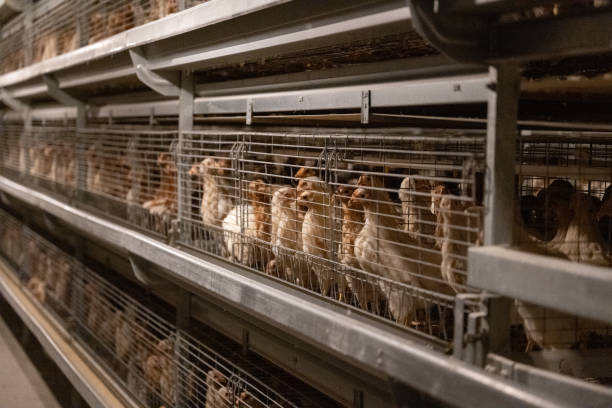
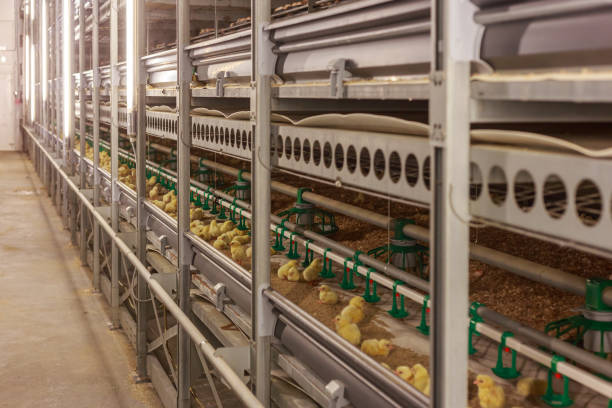
Don’t take our word for it — listen to the numbers. At Golden Beak Poultry in Nsawam, switching from wire-mesh floor pens to our 4-tier automatic layer system reduced labour time by 62% and cut egg breakage by 84%. Over at Peaceful Clutch Hatchery in Ho, integrating our 12,000-egg capacity incubators with remote humidity monitoring helped lift their week 3 hatchability rate from 67% to 89% — consistently, for 11 months straight. And in Sunyani, a youth-led cooperative added our mobile育雏笼 (brooder trolleys) with radiant heat panels — enabling them to rotate batches without barn construction, lowering startup costs by nearly 40%. These weren’t overnight miracles. They were outcomes of matching the right tool, with the right training, in the right conditions.
Ready to take your poultry farm beyond “surviving” to truly thriving? Whether you’re scouting land for your first semi-commercial setup or modernising an existing 10,000-bird operation, Livi Machinery is here to walk the path with you — not as vendors, but as partners invested in Ghana’s food sovereignty. We speak your language, understand your soil, and respect your hustle. Drop us a line today — tell us about your vision, your biggest pain point right now, and where you’d like to be in 12 months. We’ll send over a no-pressure, custom-fit solution summary — complete with realistic timelines, logistics planning, and transparent pricing in GHS. Your next step starts with a simple message: [email protected] or +233 24 567 8910 (WhatsApp-friendly).
Frequently Asked Questions
What types of poultry cages do you supply for Ghana’s climate?
We offer hot-dip galvanized layer cages, broiler floor systems with anti-slip mesh, and adjustable brooder trolleys — all with enhanced zinc coating to prevent rust in high-humidity and coastal areas. No painted or electroplated finishes — those fail too fast here.
Do your incubators work reliably during load-shedding?
Yes. All our incubators come standard with built-in battery backup (4–6 hour autonomy) and optional solar hybrid compatibility. We also provide voltage stabilisers tuned for Ghana’s fluctuating supply — tested extensively in Kumasi and Takoradi.
Can I start small and expand later?
Absolutely. Our systems are modular by design — whether it’s adding another 5 tiers to your layer house or stacking brooder units vertically as your hatch rates improve. We plan for scalability from day one.
How long does shipping take from China to Ghana?
Standard sea freight takes 28–35 days port-to-port. With our Tema-based clearing partners and pre-cleared documentation, door delivery averages 42–48 days from order confirmation. Express air options are available for urgent replacement parts.
Do you offer training in Twi, Ga, or other local languages?
Yes — our on-site training sessions include bilingual facilitators (English + your preferred local language), plus illustrated operating guides you can keep and share with your staff. No jargon, no assumptions — just clear, actionable knowledge.