
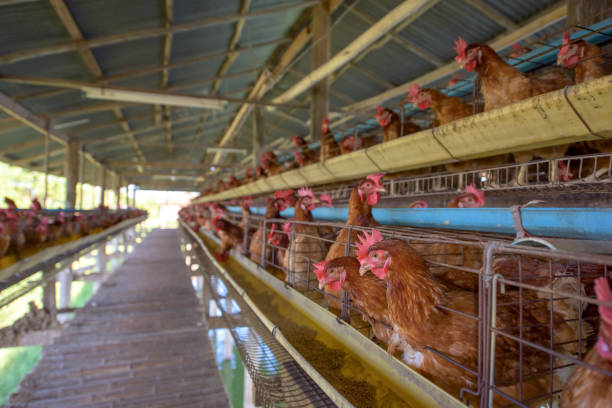
50,000 Layer Chicken Farm Project in Cameroon
For a 50,000-layer chicken farm in Cameroon, the most practical solution is a fully automated H-type layer cage system combined with automatic feeding, drinking, manure removal, egg collection, and environmental control equipment. This configuration improves egg production efficiency, reduces labor requirements, optimizes land utilization, and helps farm owners manage large-scale operations more effectively. Proper poultry house design adapted to Cameroon’s climate is equally important for long-term profitability.
How Can a 50,000-Layer Farm in Cameroon Be Designed for Maximum Efficiency?
Cameroon has a growing demand for eggs, especially in urban markets such as Douala and Yaoundé. As feed costs and labor expenses continue to increase, poultry investors are looking for systems that maximize production while controlling operating costs.
For a 50,000-layer project, the farm should be planned as an integrated production unit rather than simply installing cages inside a building.
A well-designed farm should consider:
- Local temperature and humidity conditions
- Electricity availability
- Future expansion possibilities
- Feed storage capacity
- Egg collection logistics
- Manure management requirements
- Biosecurity and disease prevention
An efficient layout helps reduce management costs and improves overall flock performance.
What Equipment Is Needed for a 50,000-Layer Chicken Farm?
The equipment selection directly affects productivity and labor efficiency.
Recommended Equipment Configuration
| Equipment | Recommended Specification |
|---|---|
| Layer Cage System | H-Type Automatic Layer Cage |
| Capacity | 50,000 Layers |
| Feeding System | Automatic Chain Feeding |
| Drinking System | Nipple Drinking System |
| Egg Collection | Automatic Egg Collection Line |
| Manure Removal | Automatic Belt Manure Removal |
| Ventilation | Fans + Cooling Pads |
| Environmental Control | Intelligent Controller |
| Feed Storage | Galvanized Feed Silos |
This combination allows the farm to operate with fewer workers while maintaining consistent production standards.
Why Is the H-Type Layer Cage System Suitable for 50,000 Birds?
For medium and large commercial egg farms, the H-type layer cage system is often the preferred choice.
Compared with conventional cage layouts, it offers:
Higher Stocking Density
The multi-tier structure utilizes vertical space efficiently, allowing more birds to be raised within the same building footprint.
Better Farm Management
Automatic feeding and manure removal reduce manual handling and improve hygiene.
Reduced Egg Breakage
Integrated egg collection belts transport eggs smoothly, minimizing damage during collection.
Improved Biosecurity
Less direct contact between workers and birds helps reduce disease transmission risks.
For investors planning long-term commercial production, H-type systems generally provide better returns than traditional cage arrangements.
How Does Automation Reduce Labor Costs in Cameroon?
Labor availability can vary significantly between regions of Cameroon. Managing 50,000 laying hens manually often requires a large workforce and creates operational challenges.
Automation can dramatically reduce labor dependence.
Automatic Feeding System
Benefits include:
- Consistent feed distribution
- Reduced feed waste
- Lower labor requirements
- Improved flock uniformity
Automatic Drinking System
The nipple drinking system provides:
- Clean water supply
- Reduced contamination
- Lower water waste
- Easy medication administration
Automatic Egg Collection System
The system can collect thousands of eggs per hour while:
- Reducing labor
- Improving efficiency
- Lowering egg breakage rates
- Simplifying daily operations
Automatic Manure Removal System
Frequent manure removal helps:
- Improve air quality
- Reduce ammonia concentration
- Lower disease pressure
- Maintain a healthier production environment
What Poultry House Design Works Best in Cameroon?
Cameroon’s climate includes tropical and humid regions where temperature control is essential for maintaining egg production.
Recommended Poultry House Features
| Item | Recommendation |
|---|---|
| House Type | Steel Structure Poultry House |
| Width | 15-18 meters |
| Ventilation | Tunnel Ventilation |
| Cooling System | Cooling Pads + Exhaust Fans |
| Insulation | Glass Wool Insulation |
| Lighting | Automatic LED Lighting |
| Control System | Intelligent Environmental Controller |
A properly designed poultry house improves:
- Feed conversion
- Egg production rate
- Bird comfort
- Disease control
- Energy efficiency
This is why professional automatic poultry farm design should be completed before equipment manufacturing begins.
What Are the Main Investment Considerations?
Before launching a 50,000-layer project, investors should evaluate several key factors.
Land Availability
The site should allow:
- Poultry house construction
- Feed storage
- Egg storage facilities
- Vehicle access
- Future expansion
Power Supply
Large-scale automated farms require stable electricity for:
- Feeding systems
- Ventilation equipment
- Egg collection systems
- Environmental controllers
Backup generators are highly recommended.
Feed Supply
Feed represents the largest operating expense in egg production. Investors should ensure reliable local feed sources before project implementation.
Expansion Potential
Many poultry businesses begin with 50,000 birds and later expand to 100,000 birds or more. Choosing scalable poultry cage equipment for large farms helps avoid costly future modifications.
What Services Does Livi Machinery Provide for Cameroon Poultry Projects?
Building a successful poultry farm requires more than purchasing equipment.
Livi Machinery supports clients through the entire project cycle.
Services Include
- Farm feasibility consultation
- Poultry house layout planning
- Equipment selection and customization
- Structural drawing design
- Production and quality inspection
- International shipping arrangements
- Installation guidance
- Technical training
- After-sales support
Our engineering team designs practical solutions according to flock size, climate conditions, management objectives, and investment budget.
For a 50,000-layer project in Cameroon, we can provide a complete layer chicken cage solution tailored to local operating conditions.
FAQ
How many poultry houses are required for 50,000 laying hens?
The number depends on the cage model and building dimensions. Many projects use one or two large houses equipped with automated H-type cage systems.
Is automatic egg collection necessary for a 50,000-layer farm?
Yes. Manual egg collection becomes inefficient at this scale. Automatic systems improve labor efficiency and reduce egg breakage.
What is the expected lifespan of galvanized layer cages?
High-quality hot-dip galvanized cages typically have a service life of 15-20 years under proper management conditions.
Can the farm be expanded later?
Yes. Most modern cage systems are designed with future expansion in mind, allowing additional houses and equipment to be added as production grows.
Is environmental control important in Cameroon?
Absolutely. High temperatures and humidity can negatively affect laying performance. Proper ventilation and cooling systems help maintain flock health and stable egg production.