
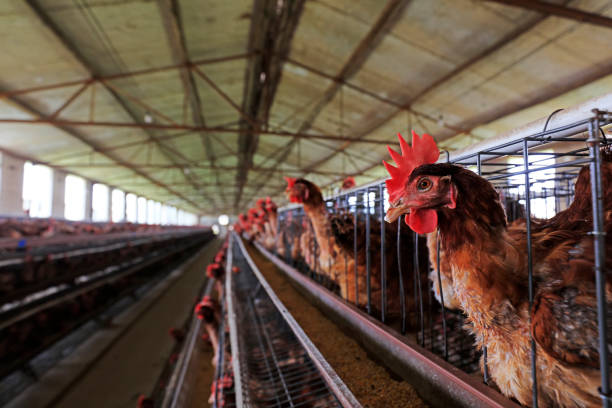
10,000 Layers Poultry Farm Solution in Burundi
For a 10,000-layer poultry farm in Burundi, the most practical solution is an A Type automatic layer cage system equipped with automatic drinking, feeding, manure removal, and optional egg collection. This configuration offers an excellent balance between investment cost and production efficiency, making it ideal for farmers entering commercial egg production or expanding from small-scale operations.
Why Is Burundi a Good Market for Commercial Egg Farming?
Demand for fresh eggs continues to increase in Burundi as urban populations grow and local poultry production modernizes. Many farmers are replacing traditional floor rearing with battery cage systems to improve productivity and reduce labor costs.
For a farm with 10,000 laying hens, automation can significantly improve management while reducing feed waste and disease risks.
Typical advantages include:
- Higher egg production efficiency
- Better feed conversion
- Easier manure management
- Reduced labor requirements
- Cleaner eggs with lower breakage
- Improved flock health
What Cage System Is Recommended for 10,000 Layers?
For this farm size, A Type Layer Chicken Cage provides the best return on investment.
According to Livi Machinery’s product specifications, the A-type system supports automatic feeding, drinking, egg collection, manure removal, and environmental control while offering a service life of 15–20 years through hot-dip galvanized construction.
Recommended Configuration
| Item | Recommendation |
|---|---|
| Farm Capacity | 10,000 Layers |
| Cage Type | A Type Layer Cage |
| Cage Tier | 4 Tier |
| Chicken House | Steel Structure |
| Feeding | Automatic Feeding Line |
| Drinking | Nipple Drinking System |
| Manure Removal | Automatic Manure Belt |
| Egg Collection | Manual or Automatic (Optional) |
| Ventilation | Exhaust Fans + Air Inlets |
This solution provides excellent ventilation and convenient daily management while keeping the initial investment within a reasonable range.
How Large Should the Poultry House Be?
For approximately 10,000 laying hens, the poultry house can generally be designed as:
| Item | Suggested Size |
|---|---|
| Width | 12–15 m |
| Length | 70–90 m |
| Height | 3.5–4.5 m |
| Structure | Steel Building |
| Roof | Insulated Sandwich Panel |
The final dimensions should be adjusted according to:
- Local land availability
- Future expansion plans
- Electricity supply
- Climate conditions
- Equipment configuration
Livi Machinery provides customized poultry house drawings before production begins.
Which Automatic Equipment Is Worth Installing?
Although Burundi still has relatively affordable labor, automation creates long-term savings and improves consistency.
Recommended equipment includes:
Automatic Feeding System
- Uniform feed distribution
- Less feed waste
- Reduced labor intensity
Automatic Drinking System
- Continuous clean water supply
- Lower disease transmission
- Easy medication through water
Automatic Manure Removal
- Better house hygiene
- Lower ammonia concentration
- Improved bird comfort
Ventilation System
Burundi experiences warm temperatures during much of the year.
Installing:
- Exhaust fans
- Air inlets
- Cooling pads (optional)
helps maintain suitable temperatures and supports stable egg production.
Estimated Equipment Investment
The total investment depends on:
- Automation level
- Steel structure requirements
- Shipping destination
- Local installation
- Feed storage equipment
Typical investment includes:
| Equipment | Investment Level |
|---|---|
| Layer Cage System | ★★★ |
| Automatic Feeding | ★★ |
| Drinking System | ★ |
| Manure Removal | ★★ |
| Ventilation | ★★ |
| Steel Structure | Optional |
Requesting a customized quotation is always recommended because every poultry project differs.
Customer Case: 10,000 Layers Project Planning for Burundi
A poultry investor from Burundi recently contacted Livi Machinery after deciding to upgrade from traditional free-range production.
The customer wanted:
- Produce commercial eggs year-round
- Reduce labor costs
- Improve flock survival
- Reserve space for future expansion to 20,000 birds
After evaluating the local conditions, our engineering team proposed:
- 4-tier A type layer cage system
- Automatic feeding
- Nipple drinking line
- Automatic manure cleaning
- Steel poultry house with natural ventilation support
The design also reserved enough floor space to add another poultry house in the future without interrupting production.
This phased investment strategy allows farmers to control initial costs while preparing for long-term growth.
Why Do Burundi Farmers Choose Livi Machinery?
Livi Machinery has supplied poultry equipment to more than 80 countries and provides complete project support from planning to installation.
Customers benefit from:
- Customized farm design
- Equipment selection guidance
- Steel structure design
- Shipping arrangement
- Installation drawings
- Remote technical support
- After-sales service
- Expansion planning
Rather than simply supplying cages, Livi Machinery focuses on delivering complete poultry farming solutions tailored to each project’s budget and production goals.
FAQ
Is A Type or H Type cage better for 10,000 layers?
For 10,000 birds, the A Type Layer Cage usually offers the best balance between investment and productivity. H Type systems become more economical for farms planning larger-scale, highly automated operations.
How many workers are needed for a 10,000-layer farm?
With automatic feeding and manure removal, 2–4 workers are generally sufficient for daily management.
Can the farm be expanded later?
Yes. The poultry house layout and utility planning can be designed to support future expansion to 20,000 layers or more.
Does Livi Machinery provide installation guidance?
Yes. We provide layout drawings, installation manuals, remote technical support, and on-site assistance when required.