
How to Design a 30,000 Layers Poultry Farm in Algeria
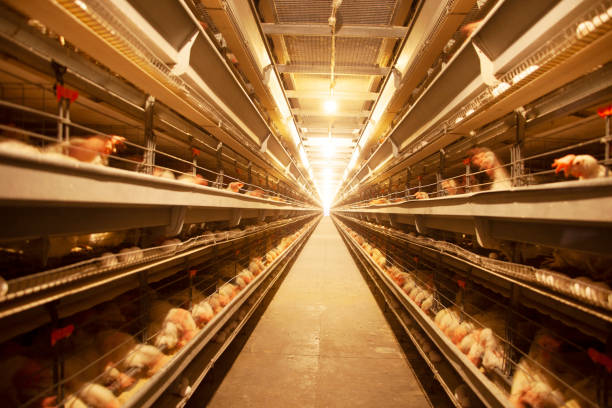
A practical 30,000 layers poultry farm design in Algeria should combine an H type layer cage system with automatic feeding, nipple drinking, manure removal, egg collection, ventilation, cooling, and centralized control. For this capacity, the poultry house must be designed around Algeria’s hot summers, available land, local power conditions, labor costs, and future expansion plans. A properly configured system can reduce daily labor requirements, improve egg handling efficiency, maintain cleaner house conditions, and create a more stable environment for laying hens.
Building a commercial egg farm is not simply a matter of purchasing 30,000 bird spaces. The cage layout, house dimensions, airflow, manure discharge route, feed storage, electrical supply, water treatment, and egg collection process must function as one integrated system.
For Algerian investors, the most important design issue is usually environmental control. High temperatures can reduce feed intake, lower egg production, weaken shell quality, and increase mortality risk. Therefore, equipment selection must begin with the poultry house climate rather than with cage price alone.
What Equipment Is Needed for a 30,000 Layers Poultry Farm in Algeria?
A commercial layer project of this size normally requires more than cages. The following equipment should be planned as one coordinated production line.
| Equipment System | Main Function | Recommended Configuration |
| H type layer cages | Houses laying hens at high density | 4-tier or 5-tier configuration |
| Automatic feeding system | Distributes feed evenly to each cage row | Feed silo, conveyor and traveling feeder |
| Nipple drinking system | Provides controlled, hygienic water | Pressure regulator, dosing unit and water lines |
| Automatic manure removal | Removes manure from each cage tier | PP manure belts and cross-house conveyor |
| Automatic egg collection | Transfers eggs from cages to collection point | Longitudinal egg belts and central conveyor |
| Ventilation system | Removes heat, moisture and harmful gases | Exhaust fans and controlled air inlets |
| Cooling system | Reduces heat stress during hot periods | Evaporative cooling pads |
| Environmental controller | Monitors and operates farm systems | Temperature, humidity and alarm control |
| Lighting system | Maintains a consistent laying program | Dimmable, moisture-resistant poultry lights |
| Backup power system | Protects birds during grid interruptions | Generator sized for ventilation and water systems |
The H type system is generally more suitable than a basic A type cage system when the project prioritizes automation, land efficiency and future expansion.
Why Is an H Type Layer Cage System Suitable for 30,000 Birds?
An H type cage arranges cages vertically, allowing more birds to be housed within the same poultry house footprint. This is especially useful when the investor wants to control construction costs or reserve land for an additional house.
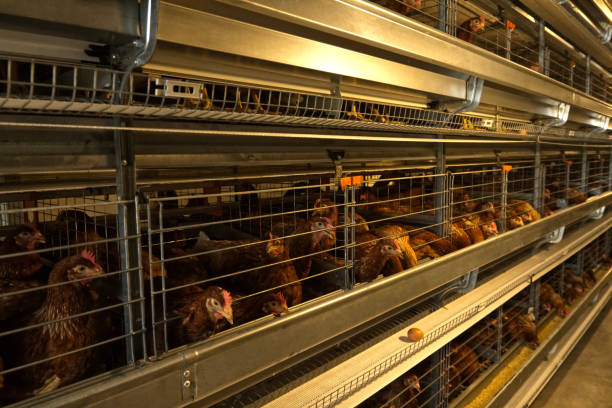
Depending on the selected model, Livi Machinery H type cages can be configured in three, four, five or six tiers. Standard cage sets can accommodate different bird numbers according to door arrangement and tier quantity, allowing the final layout to be adjusted to the poultry house length and width.
The main benefits include:
- Higher stocking capacity per square meter
- Less land required than a low-density cage layout
- Manure belts installed under every cage tier
- Automatic feed delivery to each row
- Automatic egg transfer from the cage front
- Reduced direct contact between workers and birds
- Easier daily inspection and production management
- Better preparation for future capacity expansion
The cage mesh is normally hot-dip galvanized for corrosion resistance. A sloped cage floor allows eggs to roll toward the egg belt, helping reduce collisions and breakage.
How Should the Poultry House Be Designed for Algeria’s Climate?
Algeria includes Mediterranean coastal regions, semi-arid zones and extremely hot inland areas. Therefore, one standard ventilation configuration cannot be applied to every project.
Before determining fan quantity and cooling-pad area, the supplier should evaluate:
- Project city and local summer temperature
- Relative humidity
- Prevailing wind direction
- Poultry house orientation
- Altitude
- Water availability
- Electricity stability
- Whether the house is open, semi-closed or fully closed
- Expected stocking density
For a high-density H type layer house, a closed or environmentally controlled building is usually the safer option. The system should use negative-pressure ventilation, with exhaust fans installed at one end and cooling pads or controlled air inlets at the opposite end.
During hot weather, air is pulled through the wet cooling pads before moving along the poultry house. This lowers incoming air temperature and creates uniform airflow across the cage rows.
What Should Be Included in the Environmental Control System?
A complete system may include:
- High-volume exhaust fans
- Evaporative cooling pads
- Sidewall air inlet windows
- Temperature and humidity sensors
- Static-pressure control
- Lighting control
- Emergency alarm functions
- Remote monitoring
- Backup generator connection
- Automatic switching between ventilation stages
The environmental controller should operate fans and cooling equipment in stages rather than switching every unit on at the same time. This helps maintain stable house conditions and limits unnecessary electricity consumption.
What Is a Practical Layout for 30,000 Layers?
The final layout depends on the selected cage model. A common design concept is one environmentally controlled poultry house containing multiple rows of four-tier or five-tier H type cages.
The project should be divided into functional zones:
Production House
This area contains the cage rows, feeding lines, drinking lines, manure belts, egg belts, lighting and environmental control equipment.
Feed Storage Area
A galvanized feed silo should be installed outside the house. Its capacity should be selected according to daily feed consumption, delivery frequency and the farm’s desired reserve period.
Egg Handling Area
Eggs collected from the cage rows can be transferred to a centralized collection table, grading area or egg packing room. The route should be short, clean and protected from direct sunlight.
Manure Discharge Area
Manure belts remove manure from each tier. A cross conveyor then carries it outside the poultry house. The discharge point should be separated from feed delivery and egg handling routes.
Utility Area
This zone may include:
- Electrical control room
- Water tank
- Water filtration and medication equipment
- Generator
- Tool storage
- Staff hygiene area
Separating clean and dirty routes improves farm biosecurity and makes daily operation more efficient.
How Much Automation Does a 30,000-Bird Farm Need?
Three automation levels can be considered.
| Automation Level | Included Systems | Suitable Investor |
| Basic | Automatic drinking and partial feeding | Farms with reliable low-cost labor |
| Intermediate | Automatic feeding, drinking and manure removal | Investors reducing routine labor |
| Full automation | Feeding, drinking, manure removal, egg collection and climate control | Commercial farms prioritizing consistency and expansion |
For 30,000 layers, full or near-full automation is normally more economical over the production cycle. Manual egg collection and manure handling can create bottlenecks as bird numbers increase.
Automatic systems provide several operational advantages:
- More uniform feed distribution
- Lower feed waste
- Cleaner cage rows
- Faster manure removal
- Reduced ammonia accumulation
- Fewer eggs handled manually
- Lower risk of egg breakage
- Better production-record accuracy
- Reduced dependence on a large labor team
Automation does not eliminate workers completely. Staff are still required for inspection, maintenance, mortality removal, vaccination support, egg packing and production management.
What Utility Conditions Must Be Checked Before Installation?
Many poultry projects focus on equipment capacity but overlook electricity and water requirements.
Electricity
The farm should confirm voltage, frequency and phase before equipment manufacturing. Motors, control cabinets, fans and conveyors must match the local electrical standard.
A backup generator is strongly recommended because ventilation and drinking systems cannot remain offline for long during hot weather.
Water
Water should be tested for:
- Sediment
- Hardness
- Mineral content
- Bacterial contamination
- pH
- Salinity
A front-end water system may include filtration, pressure regulation, medication dosing and water metering. Clean water protects bird health and extends the service life of nipple drinkers.
Feed
The feeding system should be configured according to the feed type and delivery method. Poor-quality or highly variable feed can reduce conveyor performance and cause uneven distribution.
How Can the Farm Be Prepared for Future Expansion?
Expansion should be considered before the first poultry house is built.
A project owner planning to increase capacity from 30,000 to 60,000 layers should reserve:
- Land for a second poultry house
- Adequate distance between houses
- A larger main electrical connection
- Water storage capacity
- Feed delivery access
- Central egg handling space
- Manure storage or treatment area
- Additional generator capacity
- Roads for trucks and installation vehicles
The first-phase control room and utility network can sometimes be designed to support the next phase. This is usually more economical than rebuilding infrastructure later.
What Information Is Needed Before Requesting a Quotation?
To prepare an accurate design and equipment quotation, the supplier needs more than the required bird capacity.
Prepare the following information:
- Project location in Algeria
- Required number of layers
- Cage type preference
- Available land dimensions
- Existing or new poultry house
- Desired automation level
- Local voltage and frequency
- Water source
- Planned expansion capacity
- Day-old chicks, pullets or ready-to-lay hens
- Preferred installation schedule
Providing these details allows engineers to calculate cage quantity, row arrangement, house dimensions, ventilation capacity, feed silo size and electrical load.
Why Work with Livi Machinery?
Livi Machinery supplies integrated poultry farming equipment rather than isolated cage components. The project process can cover poultry house planning, cage layout, system configuration, equipment production, shipping arrangement, installation guidance and after-sales support.
For a 30,000-layer project in Algeria, the engineering team can prepare:
- Poultry house layout drawings
- Cage-row arrangement
- Equipment quantity calculation
- Ventilation and cooling design
- Feed and water system configuration
- Manure and egg transport routes
- Electrical load recommendations
- Equipment installation drawings
- Expansion planning
This integrated approach helps avoid common problems such as cage rows not matching the building, insufficient ventilation capacity, poorly located manure outlets or inadequate space for egg collection.
FAQ
Is an H Type Cage System Necessary for 30,000 Layers?
It is not the only option, but it is usually the most practical option for investors who want higher land utilization, automatic manure removal, centralized egg collection and future expansion. An A type cage system may be considered where land is abundant and the initial budget is limited.
How Many Workers Are Needed for 30,000 Layers?
The number depends on automation, farm management and whether egg grading and packing are completed on site. A highly automated house requires fewer workers for routine feeding, manure removal and egg collection, but trained staff are still needed for inspection and maintenance.
Can the System Operate During Algeria’s Hot Summer?
Yes, provided the poultry house has correctly sized fans, cooling pads, air inlets, controllers and backup power. Cage equipment alone cannot prevent heat stress; the ventilation design must match local climate and stocking density.
How Often Should Manure Be Removed?
The schedule depends on bird age, house humidity and farm management. Belt manure systems can operate regularly to prevent excessive manure accumulation, reduce ammonia and maintain better indoor air quality.
Can the Farm Be Expanded to 60,000 Layers Later?
Yes. The initial site plan should reserve land, electrical capacity, water supply, road access and manure handling space for a second house. Expansion planning should be completed before construction of the first phase.
Does Livi Machinery Provide Installation Support?
Installation guidance can be included according to the project scope. The service process may cover drawings, equipment assembly instructions, technical supervision, commissioning support and after-sales assistance.