
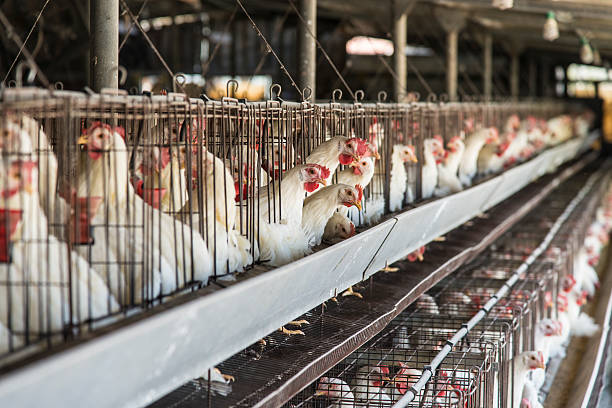
Layer Chicken Farming Price in Kenya: Complete Guide to Egg Production Cages Price in Kenya
If you are searching for the layer chicken farming price or the egg production cages price in Kenya, the total investment depends on flock size, cage type, automation level, chicken house construction, and local transportation costs. While small farms can start with manual A-type cages, medium and large commercial farms generally achieve higher long-term profitability by investing in automated H-type egg production cage systems that reduce labor costs and improve egg collection efficiency. Feed remains the largest operating expense, often accounting for over 60% of production costs.
Why Is Layer Chicken Farming Growing Rapidly in Kenya?
Kenya’s poultry industry continues to expand due to increasing egg consumption in urban areas, supermarkets, hotels, and institutions. Commercial farmers are shifting from traditional floor systems to battery cage systems because they offer:
- Higher stocking density
- Better disease control
- Lower egg breakage
- Easier manure management
- Reduced labor requirements
- Higher egg collection efficiency
These advantages make cage systems especially attractive for farms planning to keep more than 2,000 laying hens.
What Determines the Layer Chicken Farming Price in Kenya?
Instead of looking only at cage prices, successful investors evaluate the complete project cost.
| Investment Item | Cost Impact |
|---|---|
| Layer cages | High |
| Chicken house construction | High |
| Day-old chicks or pullets | High |
| Feed | Very High |
| Automatic feeding system | Medium |
| Drinking system | Medium |
| Egg collection system | Medium |
| Manure removal system | Medium |
| Ventilation equipment | Medium |
| Installation & transportation | Medium |
For commercial farms, feed is typically the largest ongoing operating expense, making efficient feeding systems an important factor in improving profitability.
Which Egg Production Cage System Is Best for Kenyan Farms?
A Type Layer Cage
This system is ideal for:
- Small and medium poultry farms
- Limited investment budgets
- Farms with available labor
- Gradual farm expansion
According to the LIVI equipment catalog, A-type cages feature:
- Hot-dip galvanized steel
- Automatic feeding
- Automatic drinking
- Automatic manure removal
- Automatic egg collection (optional)
- Service life of approximately 15–20 years with hot-dip galvanizing.
H Type Layer Battery Cage
For farms planning commercial egg production, H-type cages provide:
- Higher stocking density
- Maximum land utilization
- Fully automatic operation
- Reduced labor requirements
- Lower egg breakage
- Better environmental control
The LIVI catalog notes that H-type systems support automatic feeding, drinking, manure removal, egg collection, and environmental control while enabling significantly higher bird density than traditional A-type cages.
What Influences Egg Production Cages Price in Kenya?
Several factors affect the final quotation.
1. Cage Material
Hot-dip galvanized cages generally cost more initially but provide much longer service life than electro-galvanized products.
2. Automation Level
Additional equipment may include:
- Automatic feeding
- Automatic drinking
- Egg collection
- Manure removal
- Climate control
- Environmental monitoring
Higher automation increases initial investment but significantly reduces long-term labor expenses.
3. Farm Capacity
Larger projects usually receive lower equipment costs per bird because transportation and installation costs are spread across more equipment.
4. Shipping Distance
Ocean freight, inland transport, customs duties, and local delivery all influence the final project budget.
Recommended Equipment Configuration
| Farm Size | Recommended Cage | Automation |
|---|---|---|
| 2,000–5,000 birds | A Type | Feeding + Drinking |
| 5,000–15,000 birds | A Type or H Type | Feeding + Drinking + Manure Removal |
| 15,000–30,000 birds | H Type | Fully Automatic |
| 30,000+ birds | H Type | Complete Intelligent Poultry System |
How Can Automation Improve Farm Profitability?
Modern poultry farms focus on reducing production costs rather than simply increasing flock size.
Automated systems help farmers by:
- Reducing labor demand
- Maintaining consistent feeding schedules
- Improving flock health
- Reducing egg damage
- Simplifying manure handling
- Improving biosecurity
- Enhancing production management
The LIVI catalog also highlights intelligent environmental control systems capable of monitoring temperature, humidity, ventilation, and other house conditions to support stable production.
Is It Better to Buy the Cheapest Cage?
Not necessarily.
Many first-time investors compare only the purchase price. However, experienced poultry producers evaluate:
- Equipment lifespan
- Corrosion resistance
- Feed savings
- Egg breakage rate
- Maintenance costs
- Spare parts availability
- Technical support
- Installation guidance
A lower-priced cage may require replacement much sooner, resulting in higher lifetime costs.
Why Choose Livi Machinery?
Livi Machinery supplies complete poultry farming solutions rather than individual cage equipment.
Services include:
- Free poultry house layout design
- Customized equipment configuration
- Steel structure chicken house design
- Automatic feeding systems
- Automatic drinking systems
- Automatic manure removal
- Automatic egg collection
- Ventilation and environmental control
- Installation guidance
- Technical support
- After-sales service
The company has exported poultry equipment to more than 80 countries and provides customized solutions for commercial poultry farms worldwide.
FAQ
How much does layer chicken farming cost in Kenya?
The total investment depends on the number of birds, housing, equipment, automation level, transportation, and operating costs. Commercial farms usually calculate the project on a per-bird basis rather than purchasing equipment separately.
What is the best egg production cage for commercial farms?
For farms with more than 10,000 laying hens, fully automated H-type battery cages generally provide higher production efficiency, lower labor costs, and better space utilization.
Are automatic egg collection systems worth the investment?
Yes. They reduce egg breakage, improve labor efficiency, and help maintain egg cleanliness, making them especially valuable for medium and large commercial farms.
How long do galvanized layer cages last?
Hot-dip galvanized cages typically have a service life of approximately 15–20 years under normal operating conditions.
Can Livi Machinery customize poultry projects for Kenya?
Yes. Livi Machinery can provide customized poultry house designs, equipment selection, layout planning, installation guidance, and complete commercial poultry farming solutions based on local climate conditions and customer production goals.