
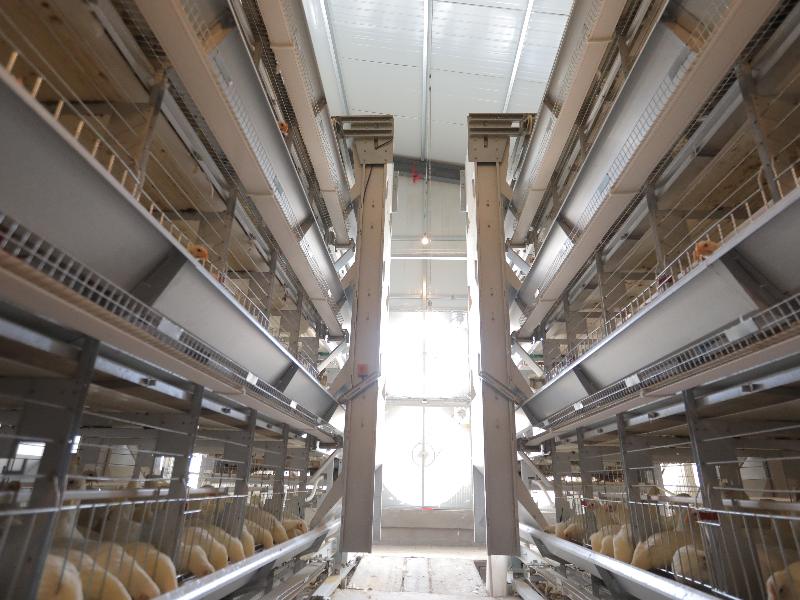
Broiler Battery Cage System in Kenya: Pre-Investment Checks for a 20,000-Bird Project
Assess a 20,000-bird broiler battery cage system in Kenya before procurement. Review LIVI H-Type product facts, site inputs, delivery planning, installation support, and missing case evidence.
Quick Answer: Can a 20,000-Bird Broiler Cage Project Be Confirmed Before Site Review?
A 20,000-bird broiler battery cage system in Kenya should be assessed against verified site, utility, operating, and market inputs before procurement. LIVI H-Type broiler stacked equipment is a product reference with 3–4 tiers and 102–136 broilers per set, but final quantity and layout require project-specific confirmation.
Planning a Similar Kenya Broiler Project?
Share your planned flock size, site or house dimensions, water and power conditions, and automation needs to discuss an H-Type broiler equipment plan.
What Should Be Decided Before Selecting a 20,000-Bird Broiler Battery Cage System in Kenya?
Confirm the broiler project direction, flock scale, sales route, site suitability, water availability, power conditions, biosecurity approach, and budget boundary. These are buyer checks, not verified Kenya conditions.

Then assess whether an H-Type Broiler Cage and proposed automation fit the poultry house and operating plan. LIVI lists this equipment for farms above 10,000 birds, so a proposed 20,000-bird farm is within its stated scale range. This does not establish a final layout or operating suitability.
FAO poultry housing and management guidance identifies environmental management as important in commercial broiler production. A final equipment decision should follow a confirmed layout rather than a generic capacity calculation.
LIVI H-Type Broiler Stacked Equipment: Confirmed Product Reference
| Item | Confirmed Reference | Planning Boundary |
|---|---|---|
| Model and structure | 肉鸡H105-80; H-Type Broiler Cage | Cage-set count requires an approved layout. |
| Material and finish | Q235 steel; hot-dip galvanized | Project scope remains to be confirmed. |
| Capacity reference | 3–4 tiers; 102–136 broilers per set | Review house space, access, and management needs. |
| Core automation | Trolley-machine Automatic Feeding, high-configuration Automatic Drinking, flat-belt plus cross/inclined Manure Removal | Final scope is project-specific. |
| Optional equipment | Feed silo, lighting, alarm, Ventilation System, and Climate Control System | Not confirmed standard inclusions. |
The reference specifies Manure Removal once daily. Electrical requirements, ventilation capacity, accessory quantities, and final configuration require confirmation.

How Should Operating Conditions Shape the Layout?
A cage-system decision is not only a capacity decision. Stocking density, feed and water access, ventilation, biosecurity strategy, ambient conditions, management capability, and market age and weight should be assessed together. WOAH broiler welfare recommendations identify these factors as relevant to stocking-density decisions.

Verify Your 20,000-Bird Project Inputs
Send your poultry house drawings, operating priorities, utility details, and required equipment scope for a practical pre-procurement configuration review.
Collect house dimensions or site drawings, usable installation area, access routes, available power, water supply, automation needs, and the operating plan. These inputs help validate tier arrangement, system access, and utility preparation.
What Delivery and Site-Readiness Checks Should Precede Shipment to Kenya?
After configuration approval, confirm the equipment list, packing plan, delivery destination, unloading access, and site storage. LIVI states that it can coordinate production, quality inspection, packaging, container loading, export delivery, packing lists, installation materials, and equipment instructions.
FOB and CIF are listed quotation methods. The applicable trade term, shipment scope, installation method, and buyer site responsibilities must be agreed for the specific order. No shipping cost, transit time, container quantity, port arrangement, or local delivery arrangement is confirmed here.
Implementation Steps for a Site-Specific Plan
- Provide target bird quantity, house dimensions or drawings, power, water, automation needs, and operating plan.
- Confirm the H-Type Broiler Cage layout and the scope of Automatic Feeding, Automatic Drinking, Manure Removal, and optional systems.
- Finalize technical documents, packing, and delivery arrangements before production and shipment.
- Prepare the house, unloading area, utilities, and installation access according to the approved plan.
- Use installation drawings and remote guidance; arrange on-site engineer support only when agreed.
- Complete installation, testing, commissioning, and operator training before routine use.
LIVI Capability Checks for Supplier Review
LIVI reports a 50-mu production base of approximately 33,000 m², with welding, equipment-component, and complete-machine assembly systems. Its stated quality process extends from material inspection through loading inspection.
LIVI states that layouts can be developed from house dimensions, bird quantity, climate conditions, and budget. Remote guidance and on-site engineer support are listed installation-training options. The company profile states an after-sales response time within 48 hours. These are capability references, not proof of a Kenya installation or guaranteed outcome.
FAQ
Is an H-Type Broiler Cage suitable for a 20,000-bird project in Kenya?
The supplied LIVI H-Type broiler stacked equipment is recommended for farms above 10,000 birds, so a proposed 20,000-bird project is within its stated scale range. Final suitability depends on confirmed house dimensions, layout, utilities, operating plan, and automation requirements. No final Kenya layout has been provided.
How many H-Type cage sets are needed for 20,000 broilers?
LIVI lists 102–136 broilers per set, but a final cage-set quantity should not be calculated without an approved layout and flock-management requirements. Tier selection, usable house space, access routes, and system integration must be reviewed before confirming equipment quantity.
What automation can be planned with the LIVI broiler battery cage system?
The product reference lists trolley-machine Automatic Feeding, high-configuration Automatic Drinking, and flat-belt plus cross/inclined Manure Removal. Feed silo, lighting, alarm, Ventilation System, and Climate Control System are optional and must be defined in the project scope.
What information is needed before requesting a broiler cage layout?
Provide the planned bird quantity, poultry house dimensions or site drawings, power conditions, water supply, automation requirements, and intended operating plan. These inputs are needed to validate configuration, layout, optional systems, delivery scope, and installation preparation.
Can LIVI provide shipping and installation support for Kenya?
LIVI states that it supports production, inspection, packaging, container loading, export delivery coordination, installation materials, remote guidance, and engineer on-site support when required. The FOB or CIF arrangement, shipment scope, installation method, and site responsibilities must be confirmed for the specific order.
Planning a Similar Kenya Broiler Project?
Share your planned flock size, site or house dimensions, water and power conditions, and automation needs to discuss an H-Type broiler equipment plan.
Verify Your 20,000-Bird Project Inputs
TAGs: 20,000-bird Kenya broiler project, H-Type Broiler Cage, broiler cage layout planning, Automated Cage System, Automatic Feeding, Manure Removal System