
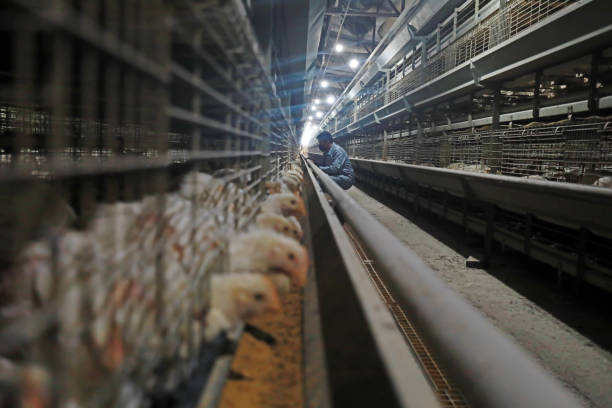
H Type Broiler Cage System in Ethiopia for 50,000 Broilers
For a 50,000-bird broiler farm in Ethiopia, an H type broiler cage system is a practical solution for farmers who want higher stocking capacity, easier manure control, better space utilization, and more standardized batch management. Compared with floor raising, H type broiler cages can help reduce land pressure, improve farm hygiene, and support automatic feeding, drinking, manure removal, and environmental control in one integrated poultry house.
Ethiopia has growing demand for commercial chicken meat, and many investors are moving from small-scale floor farming to more efficient intensive broiler production. For a 50,000-broiler project, the key is not only buying cages, but designing a complete system that matches local climate, available land, water quality, electricity conditions, labor level, and future expansion plans.
Livi Machinery provides a complete broiler cage farming solution for Ethiopian customers, including poultry house layout, H type cage configuration, feeding and drinking system, manure removal system, ventilation design, shipment planning, installation guidance, and after-sales technical support.
Why Is an H Type Broiler Cage System Suitable for Ethiopia?
An H type broiler cage system is designed for intensive commercial farms where land use, labor cost, hygiene, and production efficiency must be controlled carefully. For Ethiopian poultry investors, this system is especially suitable when the farm plans to raise tens of thousands of birds per batch and needs stable daily management.
The main advantages include:
- Higher bird capacity in the same poultry house area
- Cleaner separation between chickens and manure
- Easier observation of broiler growth and health
- Reduced manual feeding and manure cleaning work
- Better use of automatic ventilation and water systems
- More convenient batch management and chicken catching
For farms near Addis Ababa, Bishoftu, Adama, Hawassa, or other developing poultry regions, H type broiler cages can help investors build a more standardized commercial farm instead of relying heavily on manual floor management.
What Equipment Is Needed for a 50,000 Broiler Farm in Ethiopia?
A 50,000-broiler project should be planned as a complete production unit. The cage is only one part of the system. A reliable broiler farm also needs feeding, drinking, manure removal, ventilation, lighting, and electrical control systems.
| System | Recommended Configuration | Function |
|---|---|---|
| Broiler cage system | H type stacked broiler cages | Save land and improve batch density |
| Feeding system | Automatic feed line or cage feeding system | Deliver feed evenly and reduce labor |
| Drinking system | Nipple drinkers with pressure regulator | Provide clean water and reduce leakage |
| Manure removal | Belt manure removal system | Keep the house cleaner and reduce ammonia |
| Ventilation | Fans, air inlets, cooling pads if needed | Control heat, humidity, and air quality |
| Control system | Electrical control cabinet | Manage feeding, ventilation, lighting, and alarms |
| Poultry house design | Customized layout drawings | Match local land size and production target |
Livi Machinery’s broiler cage design uses hot-dip galvanized materials and automatic drinking, feeding, and manure removal systems. The stacked broiler cage system is designed for good ventilation, automatic operation, and convenient chicken catching, with cage density planned according to bird weight and farm management requirements.
How Can the 50,000-Bird Layout Be Designed?
For a 50,000-broiler farm, the layout should first confirm whether the customer wants one large poultry house or two separate houses. In many projects, two-house planning is more flexible because it allows staged production, easier disease control, and future expansion.
A typical planning direction may include:
| Planning Item | Suggested Direction |
|---|---|
| Total capacity | 50,000 broilers per batch |
| Cage type | H type broiler cage system |
| House quantity | 1 large house or 2 medium houses |
| Automation level | Feeding, drinking, manure removal, ventilation |
| Management goal | High survival rate, uniform growth, lower labor input |
| Expansion option | Reserve land and equipment interface for future capacity increase |
The exact number of cage rows, tiers, fans, feeding lines, water lines, and manure belts should be calculated according to the customer’s land dimensions, target market weight, broiler breed, and local building conditions.
What Should Ethiopian Farmers Consider About Climate and Ventilation?
Ethiopia has different farming environments. Highland areas may have cooler nights, while lowland or warmer regions may require stronger cooling and air exchange. For broilers, poor ventilation can quickly cause heat stress, wet manure, ammonia buildup, and uneven growth.
For a 50,000-bird H type broiler cage house, ventilation design should consider:
- Day and night temperature difference
- Airflow distribution between cage tiers
- Humidity control during rainy seasons
- Dust and ammonia removal
- Emergency ventilation during power failure
- Cooling pad use in hotter regions
Livi Machinery can design fan quantity, air inlet position, cooling pad area, and environmental control according to the poultry house size and local climate. This is important because H type cage houses require even airflow from the lower tier to the upper tier, not just general air movement inside the house.
How Do Automatic Feeding and Drinking Improve Broiler Growth?
Feed and water directly affect broiler weight gain and flock uniformity. In manual feeding systems, some birds may eat more while others receive less feed, especially in large houses. Automatic feeding helps deliver feed more evenly and reduces worker workload.
For drinking, nipple drinkers with pressure regulation are recommended. They help provide clean water while reducing water leakage onto the manure belt or house floor. Livi Machinery’s broiler drinking system includes waterline front end, drinking lines, suspension system, voltage regulator, and waterline end components. The waterline design can also help flush sediment and reduce maintenance work.
For Ethiopian farms where water quality may vary by region, a proper filtration and flushing design is especially useful. Clean drinking water supports broiler health, reduces disease pressure, and helps maintain stable performance throughout the growing cycle.
Why Is Manure Removal Important in H Type Broiler Farming?
Manure management is one of the biggest differences between cage farming and traditional floor farming. In a floor system, wet litter can increase ammonia, bacteria, odor, and footpad problems. In an H type broiler cage system, manure falls onto belts and can be removed regularly.
This brings several practical benefits:
- Cleaner poultry house environment
- Lower ammonia concentration
- Less direct contact between birds and manure
- Easier manure collection and transportation
- Better biosecurity for large-scale farming
For a 50,000-bird farm, automatic manure removal is not optional; it is a core system for maintaining stable production. It also reduces dependence on manual labor, which is important for farms planning continuous batch production.
What Services Can Livi Machinery Provide for This Ethiopia Project?
For customers in Ethiopia, Livi Machinery can support the project from planning to operation. Instead of only supplying cages, the team can help design the complete broiler farming system according to project scale and investment stage.
Livi Machinery can provide:
- Free poultry house layout design
- H type broiler cage configuration
- Automatic feeding and drinking system design
- Manure removal and ventilation system matching
- Equipment production and quality inspection
- Container loading and shipping support
- Installation drawings and online guidance
- After-sales technical support for farm operation
For investors building a new 50,000-broiler farm, early design is very important. Correct cage layout, aisle width, ventilation direction, manure belt arrangement, and feed line position can reduce installation problems and future operating costs.
Is a 50,000-Broiler H Type Cage Farm Easy to Expand?
Yes, if expansion is considered from the beginning. Many Ethiopian poultry investors do not want to stop at 50,000 birds. They may plan to expand to 80,000, 100,000, or more birds after the first farm runs successfully.
For this reason, Livi Machinery recommends reserving:
- Extra land beside the first poultry house
- Space for future feed silos
- Electrical capacity for additional fans and motors
- Water supply capacity for more birds
- Manure collection route for expanded houses
- Standardized cage row layout for future duplication
A well-designed first house can become the model for the second and third houses, helping the farm expand faster with fewer design changes.
FAQ
1. What is the best cage system for 50,000 broilers in Ethiopia?
For a commercial 50,000-bird broiler farm, an H type broiler cage system is recommended because it saves land, supports automatic feeding and drinking, and improves manure management.
2. Can the broiler cage system be customized for Ethiopian farm conditions?
Yes. The cage layout, poultry house size, ventilation system, feeding method, and manure removal design can be customized according to land size, climate, power supply, and production target.
3. Is automatic feeding necessary for a 50,000-bird broiler project?
Yes. Manual feeding is difficult to manage efficiently at this scale. Automatic feeding helps improve feed distribution, reduce labor, and support more uniform broiler growth.
4. How does the manure removal system help broiler farms?
It removes manure from the cage system regularly, reducing ammonia, odor, humidity, and disease risk. This is important for maintaining a cleaner growing environment.
5. Can Livi Machinery provide installation support in Ethiopia?
Livi Machinery can provide installation drawings, technical guidance, equipment layout support, and after-sales assistance to help customers complete the broiler cage project smoothly.