
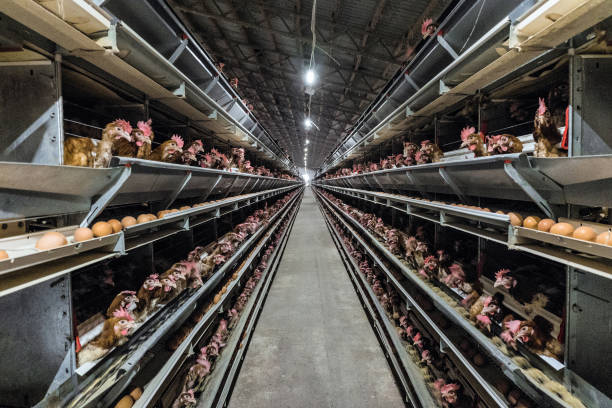
H Type Layer Chicken Cage in Burkina Faso for 60,000 Layers
For a 60,000-bird commercial egg farm, an H type layer chicken cage in Burkina Faso is a practical choice because it saves land, supports high-density layer farming, and can be integrated with automatic feeding, drinking, manure removal, egg collection, and climate control systems. For Burkina Faso’s hot dry climate, the project should pay special attention to ventilation, cooling pads, reliable water supply, backup electricity, and a chicken house layout that allows future expansion.
Burkina Faso has a dry tropical climate, with a rainy season generally from June to September and hot Harmattan-influenced conditions from March to May. Average monthly temperatures can range from about 25°C to 32°C, with maximum temperatures reaching around 40°C in March and April. This makes environmental control a key part of any 60,000-layer poultry farm design.
Why Choose an H Type Layer Chicken Cage in Burkina Faso?
For investors planning a medium or large egg production project, the H type cage system offers better space utilization than traditional open-house or A type cage farming. In a 60,000-layer project, land efficiency is especially important because the farm must leave enough space for feed storage, egg room, manure handling, water tanks, generator room, access roads, and future expansion.
Compared with low-density systems, H type layer cages allow more birds to be raised inside a controlled poultry house. Livi Machinery’s H type layer cage equipment is designed for intensive layer farming, with automatic feeding, drinking, egg collection, manure removal, and environmental control available as an integrated solution. The cage mesh uses hot-dip galvanized treatment, and the bottom mesh is designed with an egg-rolling slope to help reduce egg breakage.
What Equipment Is Needed for a 60,000-Layer Poultry Farm?
A 60,000-layer farm should not be planned only as “cages plus chickens.” It should be designed as a complete production system. The major equipment configuration may include:
| System | Recommended Configuration | Main Purpose |
|---|---|---|
| H type layer cage | 4-tier, 5-tier, or customized layout | Save land and improve stocking efficiency |
| Automatic feeding system | Feed silo, conveyor, cage feeding trolley | Uniform feed distribution and labor saving |
| Automatic drinking system | Nipple drinkers, pressure regulator, waterline | Stable water supply and reduced leakage |
| Manure removal system | Belt manure removal on each tier | Better hygiene and lower ammonia accumulation |
| Egg collection system | Egg belt and elevator collection | Reduce labor and egg damage |
| Ventilation system | Fans, air inlets, cooling pads, controller | Reduce heat stress and stabilize house climate |
| Electrical support | Generator, voltage stabilizer, control cabinet | Protect automation during power fluctuation |
For Burkina Faso, backup power should be considered at the design stage. World Bank data shows Burkina Faso’s access to electricity was 21.7% of the population in 2023, so poultry farms outside major urban areas should prepare for unstable grid conditions.
How Should the Chicken House Be Designed for Hot Conditions?
In hot climates, poultry house design directly affects egg production. Heat stress can reduce feed intake and reproductive efficiency in hens, which may lower egg production and affect shell quality. For this reason, the poultry house should be planned around airflow, cooling, and stable water intake.
For a 60,000-layer H type cage project in Burkina Faso, Livi Machinery would usually evaluate:
- Local temperature and humidity conditions
- Available land size and orientation
- Water source and daily water demand
- Power supply and generator capacity
- Planned cage tier number and house width
- Egg room, feed room, manure area, and access road layout
- Whether the customer wants to expand to 80,000 or 100,000 layers later
A practical design may use a closed or semi-closed poultry house with negative-pressure ventilation, cooling pads, side-wall air inlets, exhaust fans, and an intelligent controller. This helps maintain airflow across the cage rows and reduces the risk of heat accumulation in upper cage tiers.
What Are the Benefits of Automation for 60,000 Layers?
At 60,000 birds, manual management becomes difficult and inconsistent. Automation is not only about reducing workers; it also improves production stability.
The main benefits include:
- Lower labor demand: Feeding, drinking, manure cleaning, and egg collection can be operated automatically.
- More uniform feeding: Birds receive feed at regular times, helping improve flock uniformity.
- Cleaner poultry house: Belt manure removal reduces manure accumulation and helps control odor and ammonia.
- Lower egg breakage: Egg belts and buffer devices reduce manual handling and collision.
- Better farm records: With control systems, managers can monitor feeding, water use, temperature, humidity, and equipment operation.
For Burkina Faso farm owners, this is especially useful when skilled poultry labor is limited or when the farm is located far from large cities.
How Can Livi Machinery Support the Project from Design to Installation?
For a 60,000-layer project, the equipment supplier should provide more than cage quotations. Livi Machinery can support customers with project planning, cage layout, poultry house design suggestions, equipment configuration, production, delivery, installation guidance, and after-sales service.
A typical cooperation process includes:
- Confirm bird quantity, land size, target egg production, and budget.
- Design the cage layout and poultry house dimensions.
- Recommend the suitable H type layer cage model and automation level.
- Configure feeding, drinking, manure removal, egg collection, and ventilation systems.
- Provide equipment quotation and shipping plan.
- Arrange production, packing, transport, and remote or on-site installation guidance.
- Support later operation, maintenance, and expansion planning.
This full-process approach helps reduce design mistakes, installation delays, and mismatches between cages, house structure, ventilation, and automation equipment.
What Should Investors Consider Before Starting?
Before building a 60,000-layer poultry farm in Burkina Faso, investors should calculate not only cage cost but also the complete project cost. Important factors include land preparation, poultry house construction, equipment import, transportation, installation, generator, water tank, feed storage, labor training, and spare parts.
A useful planning principle is to design the first project with future expansion in mind. For example, if the first stage is 60,000 layers, the site layout can reserve space for another poultry house, larger egg storage area, additional manure handling capacity, and upgraded feed storage.
FAQ
1. Is an H type layer cage suitable for 60,000 layers in Burkina Faso?
Yes. H type layer cages are suitable for 60,000-layer commercial farms because they save land, support high-density farming, and can be matched with automatic feeding, drinking, manure removal, egg collection, and ventilation systems.
2. How many chicken houses are needed for 60,000 layers?
The number of houses depends on cage tier, house width, row layout, and local building conditions. Livi Machinery can design one or multiple poultry houses according to the customer’s land size and expansion plan.
3. Why is ventilation important in Burkina Faso?
Because high temperatures can reduce feed intake, egg production, and shell quality. A well-designed ventilation and cooling system helps remove heat, moisture, dust, and ammonia from the poultry house.
4. Can the system be expanded later?
Yes. If the land and poultry house planning are prepared correctly, a 60,000-layer project can be expanded to a larger scale by adding cage rows, another house, or upgraded feed and egg collection systems.