
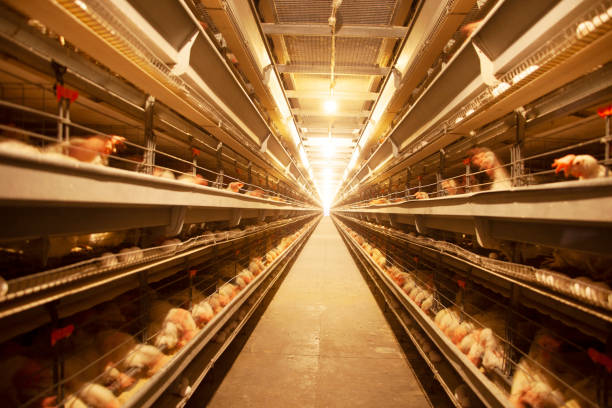
40,000 Layers H Type Battery Cage Project in Cameroon
s to expand in Cameroon, many investors are shifting from traditional floor systems to automated cage farming. With abundant market demand for fresh eggs and increasing labor costs, automation has become one of the most effective ways to improve farm performance.
Why Is an H Type Layer Cage System Suitable for Cameroon?
Cameroon has a tropical climate characterized by high temperatures and seasonal humidity. These environmental conditions make ventilation and manure management especially important.
Compared with conventional A-type cages, the H type battery cage system provides:
- Higher stocking density
- Better ventilation between cage rows
- Cleaner production environment
- Lower disease transmission
- Easier automatic management
- Reduced egg breakage
- Higher labor efficiency
For a farm housing 40,000 layers, automation significantly reduces operating costs over the lifetime of the project.
Farm Project Overview
| Item | Specification |
|---|---|
| Country | Cameroon |
| Capacity | 40,000 Layers |
| Cage Type | H Type Layer Battery Cage |
| House Size | Approximately 200m × 1000m Project Site |
| Feeding System | Fully Automatic |
| Drinking System | Automatic Nipple Drinking |
| Egg Collection | Automatic Belt Egg Collection |
| Manure Removal | Automatic PP Belt Cleaning |
| Ventilation | Exhaust Fans + Cooling Pads + Air Inlets |
| Environmental Control | Intelligent Controller |
How Is the Poultry House Designed?
Although the project site measures 200m × 1000m, the production area is divided into functional zones to improve workflow.
Typical layout includes:
- Layer chicken house
- Feed storage area
- Egg collection room
- Equipment control room
- Manure collection area
- Generator room
- Internal transportation road
- Future expansion space
This layout allows efficient movement of feed, eggs, workers, and vehicles while reducing biosecurity risks.
What Equipment Is Included?
A complete automated poultry farm requires more than cages alone.
1. H Type Layer Cage System
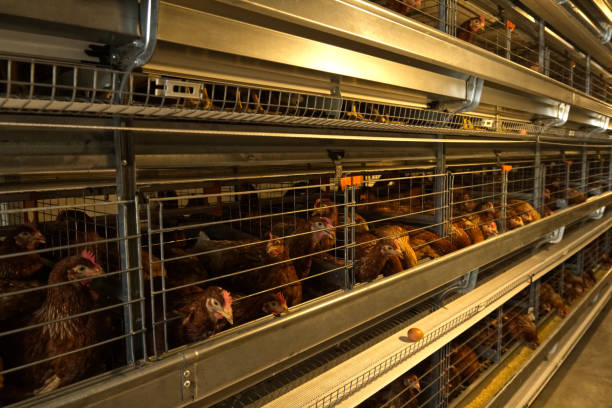
The H-type structure increases stocking density while ensuring excellent ventilation.
Key features include:
- Hot-dip galvanized steel
- 15–20 years service life
- Multi-tier cage design
- Low egg breakage rate
- Easy flock management
According to the product specifications, hot-dip galvanized cage mesh provides corrosion resistance several times higher than ordinary galvanized wire and supports a service life of 15–20 years. The system also integrates automatic feeding, drinking, manure removal, egg collection, and environmental control.
2. Automatic Feeding System
The feeding system includes:
- Feed silo
- Feed conveyor
- Hopper
- Automatic feeding trolley
Benefits:
- Uniform feed distribution
- Reduced feed waste
- Lower labor requirement
- Consistent bird growth
3. Automatic Egg Collection
For a flock of 40,000 hens, manual egg collection consumes considerable labor.
The automatic egg collection system provides:
- Gentle egg transportation
- Reduced shell damage
- Faster collection
- Improved hygiene
- Easy grading and packaging
The catalog notes that the automatic egg collection system is designed with belt transport and buffer devices to reduce egg breakage while supporting high collection efficiency.
4. Automatic Manure Removal
Daily manure removal helps maintain a healthier poultry house.
Advantages include:
- Lower ammonia concentration
- Better air quality
- Reduced disease risk
- Cleaner working environment
- Easier manure recycling
The PP manure belt system is designed for corrosion resistance, efficient transport, and reliable operation with wear-resistant scrapers.
5. Environmental Control System
Cameroon’s warm climate requires effective ventilation throughout the year.
Recommended equipment includes:
- Exhaust fans
- Cooling pads
- Air inlet windows
- LED lighting
- Intelligent environmental controller
The intelligent control system can automatically regulate temperature, humidity, ventilation, lighting, and other environmental parameters while supporting real-time monitoring.
Why Choose Automation for a 40,000-Layer Farm?
Compared with manual farming, a fully automated system offers measurable advantages.
| Manual Farm | Automated H Type Farm |
|---|---|
| More workers required | Fewer workers needed |
| Manual egg collection | Automatic collection |
| Higher egg breakage | Lower egg loss |
| Uneven feeding | Uniform feeding |
| Difficult manure handling | Automatic cleaning |
| Higher disease pressure | Better hygiene |
| Lower production efficiency | Higher management efficiency |
Automation also enables more consistent production, making it easier to meet commercial egg supply contracts.
Important Considerations for Poultry Farming in Cameroon
Before starting a large-scale project, investors should evaluate:
Electricity Supply
Stable power is essential for automatic feeding, ventilation, and egg collection. A backup generator is strongly recommended.
Climate
High temperatures increase the importance of cooling pads, ventilation fans, and proper insulation.
Biosecurity
Separate clean and dirty traffic routes help reduce disease transmission.
Future Expansion
The 200m × 1000m project site provides sufficient space for additional poultry houses as production grows.
Why Work with Livi Machinery?
Livi Machinery provides complete support throughout the project lifecycle, including:
- Farm planning
- Customized poultry house design
- Equipment manufacturing
- Steel structure design
- Shipping coordination
- Installation guidance
- Technical training
- After-sales service
Rather than supplying individual products, the engineering team develops integrated solutions tailored to local climate conditions, farm capacity, and investment goals.
FAQ
How many workers are needed for a 40,000-layer automated farm?
Depending on the automation level, approximately 4–8 workers can operate the farm efficiently, significantly fewer than a comparable manual system.
Is an H type cage better than an A type cage?
For commercial farms with 40,000 birds or more, H type cages generally provide higher stocking density, greater automation, and improved management efficiency.
Can the poultry house design be customized?
Yes. The cage layout, number of rows, tiers, ventilation system, and automation level can all be customized according to the customer’s land size, climate, and investment budget.
Is this solution suitable for Cameroon?
Yes. The design can be adapted to Cameroon’s tropical climate by integrating cooling pads, exhaust fans, insulated steel structures, and intelligent environmental controls.