
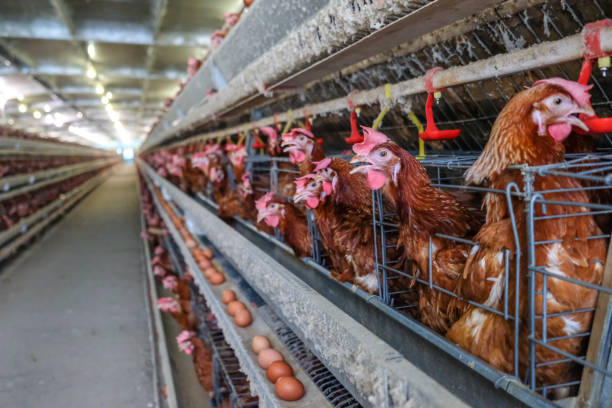
30,000 Layers Poultry Farm Design in Rwanda
A 30,000-layer project is large enough to require more than cages alone. The farm must work as an integrated production system where housing, feed delivery, water supply, egg handling, manure removal, ventilation, and worker movement support one another. For investors in Rwanda, the right layout can help reduce avoidable labour pressure, protect egg quality, and make daily management more predictable.
What Equipment Is Needed for a 30,000-Layer Farm in Rwanda?
For this capacity, Livi Machinery generally recommends an automated H-type layer cage solution rather than a basic manual setup. A multi-tier system uses vertical space efficiently and supports centralized feeding, drinking, egg collection, and manure removal.
| Farm Module | Recommended Configuration | Operational Value |
| Layer houses | Two separate houses for 15,000 birds each | Better disease separation and easier flock scheduling |
| Cage system | Four-tier H-type layer battery cage system | Higher capacity per building footprint |
| Feeding | Feed silo, conveyor, hopper, and automatic feeding line | More uniform feed distribution and lower daily labour demand |
| Drinking | Nipple drinking lines with pressure regulator and water meter | Cleaner water delivery and easier monitoring |
| Egg collection | Automatic egg belts and central egg conveyor | Reduced manual handling and lower egg collision risk |
| Manure removal | Automatic manure belts with transfer conveyor | Cleaner house environment and faster waste removal |
| Ventilation | Exhaust fans, air inlets, controller, and optional cooling pads | More stable airflow and humidity management |
| Power safety | Generator, transfer switch, alarm system, and protected control cabinet | Keeps essential equipment running during power interruptions |
A four-tier H-type cage configuration can use reference cage units of approximately 1,200 mm × 625 mm × 480 mm, depending on the selected model and bird density. The final row quantity, aisle width, and building size should be confirmed through a detailed automatic poultry farm design rather than estimated only from bird quantity.
Why Should a 30,000-Bird Farm Use Two Houses Instead of One?
A single large house can appear simpler at the beginning, but two 15,000-layer houses offer stronger operational control.
First, separate houses reduce the impact of a management issue in one flock. If one building needs maintenance, sanitation, or health observation, the second house can continue operating normally.
Second, the two-house plan supports staggered flock placement. Instead of replacing all 30,000 birds at the same time, the farm can schedule production cycles more flexibly and reduce sudden changes in egg output.
Third, this layout is better suited to sites with uneven ground. Rwanda’s terrain often requires careful planning of access roads, drainage channels, loading areas, and feed delivery routes. Two parallel houses on a properly prepared platform can be easier to construct and manage than one excessively long building.
How Should the Poultry House Handle Rainfall and Humidity?
Rainwater management should be treated as a production issue, not only a civil construction detail. The poultry house should include:
- Raised foundations and finished floors above surrounding ground level.
- Roof gutters and downpipes that direct rainwater away from the chicken house.
- Drainage channels around the house, feed silo area, and egg room.
- Covered loading points for feed delivery and egg collection.
- Air inlets designed to avoid direct cold drafts during wet weather.
- A ventilation controller that adjusts fans and air inlets according to temperature and humidity.
The goal is not simply to increase fan quantity. In wet conditions, the farm needs controlled air exchange that removes moisture and ammonia without creating uncomfortable air movement around the birds.
Which Automation Systems Create the Most Value?
For a 30,000-bird farm, the most important automation investments are feeding, egg collection, manure removal, and environmental control.
Automatic feeding helps distribute feed more consistently across cage rows. This can reduce uneven feeding and shorten the time workers spend moving feed manually. Feed silos should be selected according to delivery frequency, local feed supply planning, and the farm’s preferred safety stock.
An automatic drinking system with nipple lines, pressure regulation, medication capability, and water consumption monitoring is also essential. Daily water data can help farm managers notice abnormal changes in flock behaviour earlier.
The automatic egg collection system is especially valuable as egg volume rises. Livi’s reference egg collection configuration can be specified for capacities of at least 12,000 eggs per hour. This allows the farm to collect eggs in planned batches, reduce excessive handling, and improve the efficiency of the egg room.
Automatic manure belts are equally important for house hygiene. Regular manure removal helps keep the air cleaner, lowers moisture accumulation beneath cages, and reduces the amount of manual cleaning inside the poultry house.
How Can the Farm Be Prepared for Future Expansion?
A 30,000-layer farm should not be designed as a closed project. The first-stage layout should reserve space for a third poultry house, additional feed storage, a larger egg grading room, and manure processing facilities.
Before construction, the farm should prepare a master site plan that includes:
- Future poultry house positions.
- Generator and electrical distribution capacity.
- Water tank and pipeline expansion points.
- Feed truck turning space.
- Egg room extension area.
- Manure collection and composting zone.
- Internal roads separated from clean production areas.
This approach prevents future expansion from disturbing the operating flock or requiring expensive demolition work. It is particularly important for investors who plan to grow from 30,000 to 50,000 or 60,000 layers after establishing stable egg sales channels.
Why Work with Livi Machinery for This Project?
Livi Machinery can support the project from the planning stage rather than only supplying cages. The service scope can include poultry house layout planning, H-type cage configuration, equipment selection, shipping preparation, installation guidance, commissioning support, and after-sales technical service.
For a Rwanda layer farm, the design team can evaluate the planned bird quantity, land dimensions, local climate, available power supply, feed storage needs, and future expansion target before confirming the equipment list. This helps ensure that the cage system, ventilation equipment, egg room, and manure route work together as one practical production facility.
FAQ
Is an H-type layer cage system suitable for 30,000 layers?
Yes. A four-tier H-type system is a practical choice for 30,000 layers because it improves space utilization and can integrate automated feeding, drinking, egg collection, manure removal, and environmental control.
Should the farm install a generator?
Yes. Backup power should be included for essential equipment such as ventilation fans, water supply, feeding lines, egg conveyors, lighting, and control systems. The generator capacity should be calculated according to the final equipment load.
Can the farm start with 30,000 birds and expand later?
Yes. The recommended approach is to reserve land, electrical capacity, water connections, and traffic routes for future poultry houses. This makes expansion more efficient and reduces disruption to the existing farm.
Does Livi Machinery provide poultry house design support?
Yes. Livi Machinery can provide a customized farm layout, equipment configuration, installation guidance, and quotation based on the customer’s target capacity, land size, automation level, and expansion plan.