
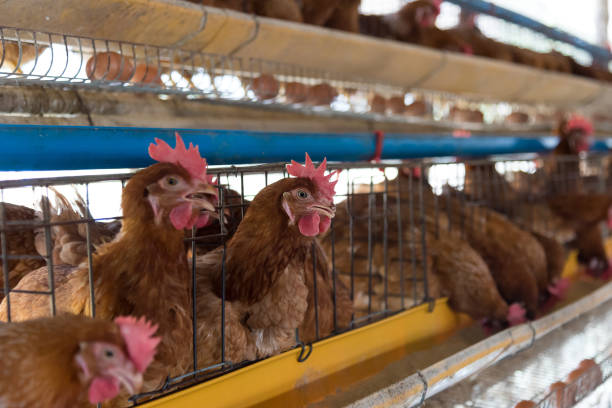
Automatic Poultry Farming Equipment for 35000 Birds
If you’re running a poultry operation with 35,000 birds, you’ve probably realized by now that manual management just doesn’t cut it anymore. At that scale, the days are too short, the workload is too heavy, and the margin for error gets really thin. Whether you’re expanding your existing farm or building a new one from scratch, investing in automatic poultry farming equipment is no longer a luxury—it’s the smartest business decision you can make. We’ve been in the game since 2012, helping farmers just like you transition from back-breaking labor to smart, efficient production. We specialize in designing systems that handle the heavy lifting so you can focus on growing your business. In this article, we’re going to walk through what a fully automated system looks like for a 35,000-bird capacity, why it works, and how it can literally transform your daily life and your bottom line.
Why 35,000 Birds Is the Sweet Spot for Full Automation
There’s a common misconception that automation is only for mega-farms with millions of birds. That’s just not true. In fact, a 35,000-bird operation is the perfect candidate for a complete automation overhaul . At this capacity, you’re big enough to feel the pain of rising labor costs but still agile enough to implement changes quickly. Think about what a typical day looks like without automation: you’ve got workers hand-feeding, manually collecting eggs, hauling feed bags, and shoveling manure. It’s exhausting, and frankly, it’s inefficient.
When you switch to automatic equipment, you’re not just buying machines; you’re buying back your time. Systems like our H-type layer cages are designed to maximize every square foot of your poultry house. By going vertical, you can comfortably house 35,000 birds in a space that would traditionally hold far fewer, which is a game-changer if you’re working with limited land . Plus, automated systems drastically cut down on the wear and tear of your workforce. Instead of five or six people doing grunt work all day, you might only need two or three technicians to monitor the systems and handle maintenance . That’s not just saving on wages; that’s building a more stable, skilled team.
The Core Components of a High-Performance Automated System
So, what does an automatic poultry farming system actually include? It’s more than just a cage and a feeder. It’s an integrated ecosystem that manages the environment, the nutrition, and the waste. First up is the feeding and watering system. With 35,000 birds, even a small waste of feed adds up to a huge financial loss. Our automatic feeding lines run on a timer, delivering precise rations to every single trough simultaneously. This eliminates the pushing and shoving you see with manual feeding and ensures every bird gets exactly what it needs, which improves your feed conversion ratio significantly .
Then there’s the automatic egg collection system. If you’ve ever had to hire seasonal workers to pick eggs, you know how stressful it can be. Broken eggs, missed eggs, and tired workers lead to losses. With our system, eggs roll gently onto a central conveyor belt and travel straight to the packing room. This not only cuts down on breakage rates—often dropping below 0.5%—but also keeps the eggs cleaner, which means they fetch a better price at market . Finally, you can’t overlook the manure management system. In a manual setup, the ammonia smell can be overwhelming, and it’s bad for the birds’ respiratory health. Our automatic manure belts run several times a day, removing waste immediately and carrying it out of the house, keeping the air fresh and the birds healthy .
Real Results: What Automation Does for Your Bottom Line and Peace of Mind
Let’s talk numbers, because that’s what really counts. Farmers who switch to automatic systems for operations around this scale often see labor hours drop by over 65% . Imagine what you could do with that extra time—maybe you focus on marketing your eggs to premium buyers, or maybe you just get a full night’s sleep for the first time in years. But the savings don’t stop at labor. Precision feeding reduces waste, and consistent environmental controls keep the birds stress-free. Less stress means better laying performance and longer peak production cycles. Some farms report a 5% increase in annual egg yield simply because the birds are comfortable year-round .
Beyond the daily grind, automation is about risk management. Have you ever woken up in a cold sweat worrying about a power failure or a ventilation breakdown in the middle of the night? Modern automatic systems come with smart sensors that monitor temperature, humidity, and ammonia levels 24/7. If something goes wrong—like a sudden temperature drop due to a storm—the system sends an alert straight to your phone . You can fix the problem before it becomes a disaster. It’s like having a night watchman who never sleeps. This kind of predictability allows you to scale your business with confidence, knowing that your investment is protected.
We understand that every farm is a little different. That’s why we don’t just sell you a box of parts and wave goodbye. We offer a full service, from helping you design the layout to overseeing the installation and training your staff. Whether you need broiler cages, layer cages, or a full turnkey solution, we’ve got the experience to make it work. If you’re ready to take the stress out of farming and start running your operation like a modern business, we’re here to help. Contact us today for a free consultation and let’s build the perfect system for your 35,000 birds.
Frequently Asked Questions
Q1: Is 35,000 birds too small for a fully automatic poultry cage system?
Not at all. While automation is great for mega-farms, it is incredibly effective for medium-scale operations like 35,000 birds. At this size, you feel the labor savings immediately, and the return on investment is often faster because you are replacing a higher percentage of manual labor with machines .
Q2: How many workers do I need to manage 35,000 birds with automatic equipment?
With a fully integrated system—including automatic feeding, watering, egg collection, and manure removal—you can typically run the operation with just 2 to 3 skilled technicians. Their main job shifts from manual labor to monitoring equipment and data analysis .
Q3: What kind of maintenance do these automatic systems require?
Modern poultry equipment, especially cages made from hot-dip galvanized steel, is built to last 15-20 years with minimal upkeep . Daily cleaning is usually replaced by a maintenance check every 3-5 days. Regular inspections of motors, belts, and sensors are recommended to keep everything running smoothly.
Q4: Will automatic equipment really improve my egg production numbers?
Yes, indirectly. Automation creates a stable, stress-free environment with consistent feeding and optimal air quality. When birds are healthy and stress-free, they lay more consistently and maintain peak production for longer periods. Many farmers see a noticeable bump in their annual average yield .
Q5: Can I install an automatic system in my existing poultry house?
In most cases, yes. While new construction is ideal, we specialize in retrofitting existing houses. We will assess your current infrastructure—like floor space, height, and ventilation—and customize a solution that fits your layout and budget .
Q6: What is the most important piece of equipment to automate first?
If you have to phase in your automation, start with the feeding and environmental control systems. These have the biggest impact on bird health and feed costs. After that, adding automatic egg collection will save the most labor hours .
Q7: How does the automatic egg collection prevent breakage?
The system is designed with gentle slopes and padded collection points. Eggs roll slowly onto conveyor belts rather than dropping or bumping into each other. This careful handling reduces breakage rates to less than 0.5%, which is much lower than manual collection .