
Poultry Farm Equipment in Algeria for 20,000 Layers and 30,000 Broilers
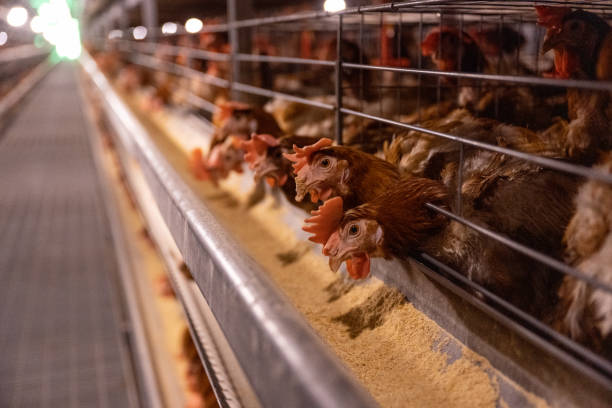
For a poultry farm in Algeria raising 20,000 laying hens and 30,000 broilers, the recommended solution is to build two functional poultry houses: one equipped with an automatic layer cage system for egg production, and another equipped with a broiler deep litter or broiler cage rearing system for meat chicken production. The complete project should include automatic feeding, nipple drinking, manure removal, egg collection, ventilation, cooling pads, lighting, and environmental control systems.
For investors in Algeria, this mixed poultry farming model can create both stable egg income and fast broiler turnover. Livi Machinery can provide free poultry house design, equipment configuration, shipping, installation guidance, and after-sales support for the whole project.
Product and equipment parameters below are based on Livi Machinery’s layer cage and poultry equipment catalogue.
Why Is Algeria Suitable for a 20,000 Layers and 30,000 Broilers Poultry Project?
Algeria has a strong demand for both table eggs and chicken meat. For farm owners who want to build a medium-to-large poultry business, combining layer farming and broiler farming is a practical investment model.
A 20,000-layer house provides continuous egg production, while a 30,000-broiler house allows several production cycles per year. This structure helps farmers balance long-term cash flow and short-term revenue.
However, poultry farming in Algeria also requires careful planning. Many regions face hot summers, dry air, dust, and temperature differences between day and night. Therefore, the poultry house design must focus on ventilation, cooling, water supply, and stable equipment operation.
What Equipment Is Needed for 20,000 Layers in Algeria?
For 20,000 laying hens, Livi Machinery usually recommends an A type layer chicken cage system or an H type layer battery cage system, depending on the farmer’s land size, budget, and expansion plan.
For a 20,000-layer project, A-type cages are often cost-effective and suitable for medium farms. If the customer plans to expand to 50,000 or 100,000 birds later, H-type cages may be a better long-term choice because they save more land and support higher-density farming.
Recommended Layer Equipment Configuration
| System | Function | Benefit for Farmers |
|---|---|---|
| A type or H type layer cage | Houses laying hens efficiently | Better space use and easier management |
| Automatic feeding system | Delivers feed evenly | Saves labor and reduces feed waste |
| Automatic drinking system | Provides clean water through nipples | Reduces leakage and disease risk |
| Automatic manure removal | Removes manure regularly | Improves air quality and hygiene |
| Automatic egg collection | Collects eggs gently | Reduces egg breakage and labor cost |
| Ventilation and cooling system | Controls temperature and airflow | Important for Algeria’s hot climate |
| Lighting system | Supports laying performance | Helps stabilize egg production |
According to Livi Machinery’s cage specifications, one A-type 4-tier 5-door layer cage set can hold 160 birds, with a cage specification of 1950 mm × 450 mm × 410 mm. For 20,000 layers, about 125 sets of this cage model are needed, subject to the final house layout and aisle design. The catalogue also shows H-type cage options such as 4-tier 2-door cages with 144 birds per set and 4-tier 4-door cages with 192 birds per set.
What Equipment Is Recommended for 30,000 Broilers?
For 30,000 broilers in Algeria, two main solutions can be considered:
- Broiler deep litter system
Suitable for farmers who want a lower initial investment and flexible house management. - Broiler cage rearing system
Suitable for farms that want higher stocking density, automatic manure removal, and more intensive management.
For many Algeria poultry projects, a broiler deep litter system with automatic pan feeding and nipple drinking is a practical choice. It offers a balance between investment cost, growth performance, and management efficiency.
Broiler House Equipment Configuration
| Equipment | Recommended Function |
|---|---|
| Automatic pan feeding system | Adjustable feed output for different broiler ages |
| Main feed line and silo | Stores and transfers feed automatically |
| Nipple drinking system | Supplies clean water and reduces wet litter |
| Ventilation fans | Removes heat, humidity, and ammonia |
| Cooling pads | Helps reduce house temperature in hot seasons |
| Environmental controller | Monitors temperature, humidity, and ventilation |
| Lighting system | Supports broiler growth and feed intake |
Livi Machinery’s broiler feeding pan design allows adjustable feed output, helps chickens access fresh feed, and reduces feed waste. The automatic nipple drinking system includes a waterline front end, drinking water system, waterline suspension system, pressure regulator, and waterline end.
How Should the Poultry Houses Be Designed?
For a mixed poultry project in Algeria, Livi Machinery recommends separating the layer house and broiler house. This helps reduce disease transmission and makes daily management easier.
A practical design may include:
- One layer house for 20,000 laying hens
- One broiler house for 30,000 broilers
- Feed storage area
- Egg storage and packing area
- Manure treatment area
- Office and worker area
- Water tank and power backup area
The final poultry house size should be calculated according to cage layout, aisle width, ventilation direction, manure removal system, and future expansion plan.
Livi Machinery provides customized farm layout drawings and equipment arrangement plans. This helps customers avoid design mistakes, reduce construction waste, and make better use of land.
How to Manage Heat, Dust, and Air Quality in Algeria?
For Algeria poultry farms, environmental control is one of the most important factors. High temperature can reduce feed intake, affect laying rate, slow broiler growth, and increase mortality risk.
A complete environmental control system should include:
- Exhaust fans
- Cooling pads
- Air inlet windows
- Temperature and humidity sensors
- Intelligent control cabinet
- Lighting control
- Emergency ventilation plan
Livi Machinery’s ventilation system can help control temperature, air quality, humidity, and ventilation mode inside the poultry house. The intelligent control cabinet can manage fans, cooling pads, lighting, and other linked equipment based on real-time house conditions.
For Algeria, this is especially useful because the system can help reduce heat stress during summer and maintain more stable production conditions.
What Are the Main Benefits of Automation for This Project?
For a farm with 20,000 layers and 30,000 broilers, manual operation will require many workers. Automation helps farmers reduce labor pressure and improve management accuracy.
Key Benefits
- Less labor for feeding, drinking, egg collection, and manure removal
- More uniform feed distribution
- Cleaner poultry house environment
- Lower egg breakage rate
- Better manure control
- Easier daily management
- More stable production data
- Better preparation for future expansion
For layer farming, automatic egg collection is especially valuable. It reduces manual handling, improves collection efficiency, and helps keep eggs cleaner. For broiler farming, automatic pan feeding and nipple drinking help improve feed conversion and reduce water leakage.
Why Choose Livi Machinery for an Algeria Poultry Project?
Livi Machinery is not only an equipment supplier but also a poultry farm solution provider. For an Algeria project, the customer does not need to purchase cages, feeding systems, drinking systems, fans, cooling pads, and layout drawings separately.
Livi Machinery can provide:
- Free poultry house design
- Layer cage and broiler equipment configuration
- Automatic feeding and drinking system
- Automatic manure removal and egg collection system
- Ventilation and environmental control system
- Shipping arrangement
- Installation guidance
- After-sales technical support
- Future expansion planning
For a 20,000-layer and 30,000-broiler project, this one-stop service can reduce communication costs and help the farmer build the farm more efficiently.
Suggested Equipment Plan for Algeria Project
| Farming Type | Quantity | Recommended System | Main Purpose |
|---|---|---|---|
| Layers | 20,000 birds | A type layer cage or H type layer cage | Egg production |
| Broilers | 30,000 birds | Deep litter system or broiler cage system | Meat chicken production |
| Feeding | Both houses | Automatic feeding system | Labor saving and uniform feeding |
| Drinking | Both houses | Nipple drinking system | Clean water and reduced leakage |
| Climate control | Both houses | Fans, cooling pads, controller | Heat and air quality management |
| Manure handling | Layer house / optional broiler cage house | Manure belt or manure cleaning system | Better hygiene |
| Egg handling | Layer house | Automatic egg collection system | Lower egg breakage |
FAQ
1. Is A type or H type cage better for 20,000 layers in Algeria?
For 20,000 layers, A-type cages are usually more economical and easier to manage. If the farmer has limited land or plans to expand later, H-type cages are a better choice because they support higher stocking density.
2. Can Livi Machinery design both layer and broiler houses?
Yes. Livi Machinery can design a complete poultry farm layout, including layer houses, broiler houses, equipment layout, ventilation design, feed storage, manure handling, and future expansion planning.
3. What equipment is necessary for 30,000 broilers?
A 30,000-broiler farm usually needs automatic pan feeding, nipple drinking, ventilation fans, cooling pads, lighting, environmental controller, feed silo, and water supply system.
4. Is automation necessary for this farm size?
Yes. For 20,000 layers and 30,000 broilers, automation is strongly recommended. It helps reduce labor costs, improve production efficiency, keep the poultry house cleaner, and make farm management more stable.
5. Can the project be expanded in the future?
Yes. Livi Machinery can design the farm with reserved space for future expansion. For example, the layer farm can be expanded from 20,000 to 50,000 birds, and the broiler house can be expanded according to production cycles and land availability.