
How Automatic Egg Collection Systems Boost Your Farm’s Profitability in Nigeria
1. Introduction: The Evolving Landscape of Poultry Farming in Nigeria
Nigeria is a major player in Africa’s poultry industry, with a high demand for eggs and poultry meat [1]. However, the sector faces significant challenges, including rising operational costs, fluctuating feed prices, and substantial labor expenses [2]. These factors often hinder profitability and sustainable growth for many farmers. One critical area where traditional practices lead to considerable losses is egg collection. Manual methods are not only labor-intensive but also result in high rates of egg breakage, directly impacting a farm’s bottom line. This article explores how automatic egg collection systems for layer cages can transform poultry farming in Nigeria by reducing breakage, cutting labor costs, and ultimately boosting overall farm profitability. We will also delve into choosing the best layer chicken cage for egg production to maximize the benefits of automation.
2. The Economic Burden of Manual Egg Collection
In Nigeria, labor costs represent a significant portion of a poultry farm’s operational expenses. While specific figures vary by region and farm size, a farm worker’s monthly salary can range from ₦40,000 to ₦60,000 [3]. For larger operations, the cumulative annual labor cost can be substantial, especially when considering accommodation, feeding, and health issues for workers [4]. Manual egg collection typically requires a considerable workforce; for instance, a farm with 100,000 laying hens might need 15-20 workers dedicated to egg collection for several hours daily [5].
Beyond the direct financial outlay for wages, manual collection is inherently inefficient and prone to errors. Accidental breakage due to human handling, dropping eggs, or collisions during transfer is a common occurrence. Industry data suggests that manual handling can lead to egg damage rates of 3-8% [5], and even up to 5-10% in traditional systems [6]. These losses, though seemingly small per egg, accumulate rapidly, translating into significant revenue loss over time. For a large farm, this could mean losing hundreds of thousands of eggs annually, representing a substantial financial drain [5]. Furthermore, frequent human presence in poultry houses can stress hens, potentially affecting their productivity and increasing the risk of contamination [5] [6]. The combination of high labor costs and considerable egg losses makes manual egg collection an unsustainable practice for modern, profit-oriented poultry farms in Nigeria.
3. How Automatic Egg Collection Systems Revolutionize Efficiency
Automatic egg collection systems are designed to address the inefficiencies and losses associated with manual methods, offering a multi-faceted approach to boosting farm efficiency and profitability.
Reduced Egg Breakage
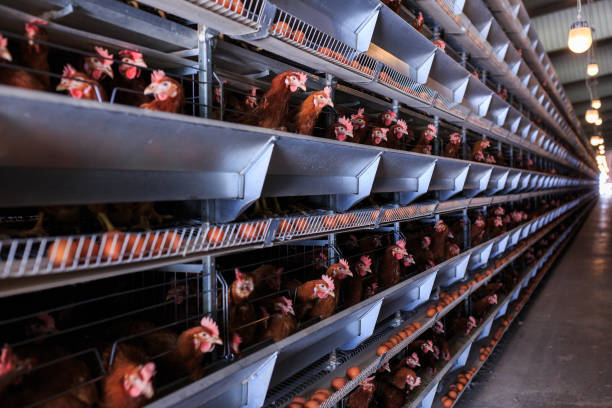
One of the most compelling advantages of automation is the drastic reduction in egg breakage. These systems employ gentle handling mechanisms, such as inclined cage bottoms (typically around 8°) that allow eggs to roll smoothly onto conveyor belts made of food-grade rubber or plastic [5]. This design minimizes impact and vibration, ensuring a cushioned journey from the laying nest to the collection point. As a result, the egg breakage rate can drop significantly, from 3-8% with manual collection to as low as 0.3-1% with automatic systems [5]. Some advanced systems can even achieve breakage rates of just 0.8% [7]. This preservation of nearly all laid eggs directly translates into higher marketable output and increased revenue.
Labor Cost Savings
Automation dramatically reduces the need for manual labor in egg collection. Fully automated systems can cut manual labor requirements by 60-70%, potentially saving farms up to $15,000 annually per 10,000 hens [6]. For a large farm with 50,000 hens, this could mean savings of $75,000 per year in labor costs [6]. Instead of a large team of workers, only a few staff members are needed for monitoring and supervision [5]. This not only reduces direct wage expenses but also mitigates challenges related to labor shortages and management complexities.
Improved Egg Quality and Hygiene
Automatic systems limit human contact with eggs, which is crucial for maintaining hygiene and reducing contamination risks. Eggs are transferred directly from the cage to the collection belt, bypassing multiple handling points where contamination can occur [6]. This minimal human interaction ensures that eggs are cleaner and safer for consumption. Furthermore, faster collection prevents eggs from sitting in cages for extended periods, reducing exposure to dirt and potential damage from hens [5].
Increased Collection Speed and Frequency
Speed and frequency of collection are vital for egg freshness and overall yield. While manual collection can take 4-6 hours on a large farm, automatic systems can operate continuously, with conveyor belts starting 4-6 times a day [5]. This ensures that eggs are collected within 30 minutes of being laid and processed within an hour from laying to packaging [5]. Such rapid collection not only preserves freshness but also minimizes the chances of eggs being pecked or stepped on by hens, further contributing to a higher yield of marketable eggs [5].
4. Choosing the Best Layer Chicken Cage for Egg Production in Nigeria
The effectiveness of an automatic egg collection system is significantly enhanced by the type of layer chicken cage used. Selecting the right cage system is paramount for optimizing egg production, ensuring hen welfare, and maximizing the benefits of automation, especially in the Nigerian context.
Importance of Suitable Cage Systems
Modern poultry farms in Nigeria commonly utilize battery cage systems, with H-type and A-type cages being prevalent. The H-frame battery cage is widely used for 10,000–200,000 layer birds in Nigeria due to its corrosion resistance and durability, often lasting 15+ years [8]. These systems are designed to maximize space efficiency and facilitate automated processes. The A-type automatic laying cage is another popular choice, known for its spacious design (e.g., 439 cm² per bird) which improves hen welfare and egg production [5].
Features that Complement Automatic Collection
For optimal integration with automatic egg collection systems, certain cage features are crucial:
•Cage Bottom Slope: An ideal cage bottom slope, typically around 8°, is essential for eggs to roll out gently and smoothly onto the collection belt, preventing cracks and damage [5].
•Durable Materials: Cages made from reinforced, corrosion-resistant materials ensure longevity and stability, which is vital for the continuous operation of automated systems. For instance, strong, durable cages are highlighted as beneficial for clean and organized egg collection in Nigeria [9].
•Feed Uniformity and Waste Reduction: Integrated feeding systems that ensure even feed distribution and minimize waste contribute to healthier birds and more consistent egg production. Large PVC feed troughs, for example, reduce spillage [5].
•Compatibility with Automation: The chosen cage system must be fully compatible with automatic egg collection systems to ensure seamless integration and maximum efficiency [5]. This includes designs that allow for easy installation of conveyor belts and other automated components.
Considerations for the Nigerian Climate and Market
When selecting layer chicken cages for Nigeria, it’s important to consider the local climate and market conditions. Cages should be designed to provide adequate ventilation and protection from high temperatures, which can stress birds and impact production. Choosing layer breeds well-suited to Nigeria’s climate and conditions, such as Isa Brown, is also recommended [10]. Furthermore, the availability of spare parts and local technical support for both cages and automation systems should be a key consideration to ensure smooth operation and minimize downtime.
5. Calculating the Return on Investment (ROI) for Automation
Investing in automatic egg collection systems represents a significant capital outlay, but the financial returns can be substantial and rapid. The Return on Investment (ROI) is primarily driven by direct cost reductions and indirect revenue enhancements.
Quantifying Savings from Reduced Breakage and Labor
As previously discussed, automatic systems drastically reduce egg breakage rates. With manual collection, breakage can be 3-8%, while automated systems bring it down to 0.3-1% [5]. For a farm with 100,000 laying hens, reducing egg loss by even a few percentage points can save hundreds of thousands of eggs annually, translating to tens of thousands of dollars in saved revenue [5]. For example, a farm could save $150,000-$200,000 per year by reducing egg loss [5].
Labor cost savings are equally impactful. Fully automated systems can reduce manual labor by 60-70%, leading to annual savings of up to $15,000 per 10,000 hens [6]. A 50,000-hen farm could realize $75,000 in labor cost savings annually [6]. These figures highlight the immediate and tangible financial benefits of automation.
Long-Term Benefits: Reduced Veterinary Costs, Extended Equipment Lifespan
Beyond immediate savings, automation offers several long-term financial advantages:
•Reduced Veterinary Costs: By minimizing human traffic and contact, automated systems lower disease risks, which can cut veterinary expenses by up to 20% [6]. Healthier flocks mean fewer medical interventions and improved productivity.
•Extended Equipment Lifespan: High-quality automated systems, often featuring heat-zinc-coated components, are designed for durability and can last 20+ years [6]. This reduces replacement costs and ensures a stable operational infrastructure for decades.
•Energy Efficiency: Modern automated systems often incorporate low-power motors and regenerative braking, cutting energy use by 30% compared to manual systems [6]. This contributes to lower operational expenses over the long run.
Case Studies and General ROI Figures
While specific ROI varies based on farm size, initial investment, and local market conditions, case studies demonstrate compelling returns. For instance, a poultry farm in Vietnam invested $250,000 in a 30,000-egg/hour system and achieved payback in 14 months, with $45,000 annual net gains thereafter [6]. Another layer farm in India saw a 90% reduction in egg breakage (from 8% to 0.8%) and a 35% annual return on investment due to reduced waste and labor savings [6].
Overall, automatic egg collection systems are reported to deliver an average ROI of 30-50% within 1-2 years [6]. This rapid payback period makes automation an attractive investment for Nigerian poultry farmers looking to modernize and significantly improve their financial performance.
6. Implementing Automation: Challenges and Solutions
While the benefits of automatic egg collection systems are clear, implementing such technology in Nigerian poultry farms can present certain challenges. However, with proper planning and strategic approaches, these obstacles can be effectively overcome.
Addressing Upfront Costs and Financing Options
The initial investment for automatic egg collection systems can be substantial, posing a significant barrier for many farmers. For example, a system for a 30,000-egg/hour capacity might cost around $250,000 [6].
Solutions:
•Modular Systems: Farmers can opt for modular systems that allow for gradual expansion, reducing the initial capital outlay [6]. This enables farms to scale their automation as their business grows and generates more revenue.
•Government Support and Loans: Programs like the Anchor Borrowers’ Scheme and NIRSAL loans in Nigeria can provide crucial funding and reduce startup costs for agricultural ventures [3]. Farmers should actively seek out and apply for such government-backed financial assistance.
•Partnerships and Leasing: Exploring partnerships with equipment suppliers or considering leasing options can help spread the cost over time, making automation more accessible.
Technical Complexity and the Need for Training and Support
Automated systems, by their nature, involve a degree of technical complexity. Operating and maintaining these systems requires a different skill set than traditional manual farming.
Solutions:
•Certified Providers with Training: Partnering with reputable and certified equipment providers is essential. Many leading manufacturers offer comprehensive training programs for farm staff on the operation, troubleshooting, and basic maintenance of their systems [6].
•24/7 Technical Support: Choosing suppliers who provide round-the-clock technical support ensures that any operational issues can be quickly addressed, minimizing downtime and potential losses [6].
•Local Expertise Development: Investing in training local technicians and farm managers can build in-house expertise, reducing reliance on external support in the long run.
Maintenance Considerations
Like any machinery, automatic egg collection systems require regular maintenance to ensure optimal performance and longevity.
Solutions:
•Systems with Low Maintenance Features: Prioritize systems designed with features that simplify maintenance, such as self-lubricating bearings and quick-release belts [6]. These features reduce the frequency and complexity of maintenance tasks.
•Scheduled Maintenance Programs: Implement a strict scheduled maintenance program as recommended by the manufacturer. Regular checks and preventive maintenance can identify potential issues before they lead to costly breakdowns.
•Availability of Spare Parts: Ensure that spare parts are readily available locally or from the supplier. This is crucial for quick repairs and to avoid prolonged periods of inactivity, which can negate the benefits of automation.
7. Conclusion: A Profitable Future with Automated Poultry Farming
The Nigerian poultry industry stands at a pivotal moment, facing both significant demand and persistent challenges. Automatic egg collection systems for layer cages offer a powerful solution to many of these hurdles, paving the way for a more efficient, profitable, and sustainable future. By drastically reducing egg breakage, minimizing labor costs, and enhancing egg quality and hygiene, these systems directly address the core economic pain points of poultry farmers.
Investing in the best layer chicken cage for egg production that seamlessly integrates with automation is not merely an upgrade; it is a strategic imperative. The compelling Return on Investment (ROI), often achieved within 1-2 years, underscores the financial viability of this transition. While upfront costs and technical complexities exist, they are surmountable through modular investments, government support, and robust training and maintenance programs.
For Nigerian poultry farmers, embracing automation is a step towards modernizing operations, safeguarding profits, and meeting the growing demand for high-quality eggs. It is an investment in efficiency, sustainability, and a more prosperous future for the agricultural sector. By adopting these advanced technologies, farms can unlock their full potential, ensuring consistent production, superior product quality, and a stronger competitive edge in the market.
Q1: What is the average egg breakage rate with manual collection compared to automatic systems?
A1: With manual collection, egg breakage rates typically range from 3-8%, and can even reach 5-10% in traditional systems. In contrast, automatic egg collection systems can reduce breakage rates significantly, often to 0.3-1%, with some advanced systems achieving as low as 0.8%.
Q2: How much can a Nigerian poultry farm save on labor costs by implementing an automatic egg collection system?
A2: Automatic egg collection systems can reduce manual labor requirements by 60-70%. This can translate to substantial savings, with farms potentially saving up to $15,000 annually per 10,000 hens. For a 50,000-hen farm, this could mean annual labor cost savings of $75,000.
Q3: What are the key features to look for in a layer chicken cage system for optimal egg production in Nigeria?
A3: Key features include an optimal cage bottom slope (around 8°) for gentle egg roll-out, durable and corrosion-resistant materials suitable for the Nigerian climate, integrated feeding systems for even distribution and waste reduction, and full compatibility with automatic egg collection systems. Considerations for local climate and market, as well as availability of spare parts and technical support, are also crucial.
Q4: What is the typical ROI for investing in an automatic egg collection system?
A4: Automatic egg collection systems generally offer a compelling Return on Investment (ROI), with an average payback period of 1-2 years and an average ROI of 30-50%. This is driven by significant savings from reduced egg breakage and labor costs, as well as long-term benefits like lower veterinary expenses and extended equipment lifespan.
Q5: Are there financing options available for Nigerian farmers to adopt poultry automation technology?
A5: Yes, Nigerian farmers can explore various financing options. Government support programs and loans, such as the Anchor Borrowers’ Scheme and NIRSAL loans, are available to assist agricultural ventures. Additionally, farmers can consider modular systems for gradual investment or explore partnerships and leasing options with equipment suppliers to manage upfront costs.