
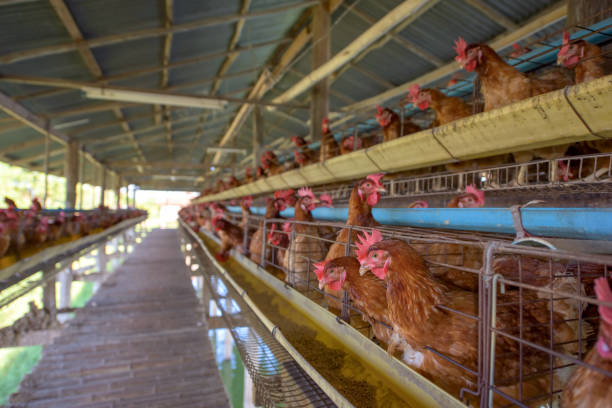
Automatic Chicken Cage Equipment in Zimbabwe for 20,000 Layers
For a 20,000-layer poultry farm in Zimbabwe, the recommended solution is an automatic layer cage system with automatic feeding, nipple drinking, belt manure removal, egg collection, and ventilation control. For most medium-sized egg farms, an A-type automatic layer cage system offers a strong balance between investment cost, easy operation, ventilation, and future expansion. If the customer has limited land or plans to scale quickly, an H-type layer battery cage system can also be considered.
Zimbabwean poultry investors should pay special attention to ventilation, water supply, power backup, manure handling, and labor efficiency because stable farm management directly affects egg production, bird health, and long-term profitability.
Why Choose Automatic Chicken Cage Equipment in Zimbabwe for 20,000 Layers?
A 20,000-layer farm is no longer a small backyard operation. It requires structured housing, accurate feeding, reliable drinking, clean manure management, and efficient egg handling. FAO describes integrated egg production as a more advanced model involving mechanization and automation, including controlled housing, scientific feeding, and mechanized egg collection.
For Zimbabwe, this is especially important because poultry farmers must manage climate variation, disease prevention, feed cost, and labor availability. The World Bank notes that Zimbabwe is exposed to climate-related shocks, which makes farm resilience and controlled production systems more important for agricultural investment.
An automatic chicken cage system helps farmers:
- Reduce daily labor for feeding, manure cleaning, and egg collection
- Improve cage hygiene and reduce ammonia accumulation
- Lower egg breakage during collection and transfer
- Keep feeding quantity more uniform
- Create a cleaner environment for layer health
- Make farm management easier for one or two trained workers
For a 20,000-bird project, the goal is not only to install cages but to build a complete layer chicken cage solution that can run smoothly for many years.
What Cage Type Is Suitable for a 20,000-Layer Farm?
For this scale, Livi Machinery usually evaluates two options: A-type automatic layer cage equipment and H-type layer cage equipment.
| Option | Suitable Situation | Main Advantage | Investment Level |
|---|---|---|---|
| A-type automatic layer cage | Medium farms with enough land and good natural airflow | Cost-effective, easy to manage, simple maintenance | Moderate |
| H-type layer battery cage | Farms with limited land or strong expansion plans | Higher bird density and stronger automation | Higher |
| Reserved expansion layout | Customers planning 40,000–60,000 layers later | Saves future redesign cost | Flexible |
For many Zimbabwean farms raising 20,000 layers, the A-type automatic layer cage system is practical because it provides good ventilation, simple operation, and lower initial investment. Livi’s A-type cage can be equipped with automatic feeding, drinking, egg collection, manure removal, and climate control systems, making it suitable for medium-sized poultry farms.
However, if the customer wants a compact poultry house or plans to double capacity later, Livi Machinery can design an H-type layout from the beginning. Livi’s H-type cage system is designed for higher-density farming, saving land and reducing construction investment in larger farms.
What Equipment Is Included in the 20,000-Layer Automatic System?
A complete automatic layer cage project should include more than cages. The full configuration should match the chicken house, local climate, labor plan, and budget.
| System | Recommended Configuration | Function |
|---|---|---|
| Layer cages | A-type automatic cage or H-type cage | Houses layers safely and improves stocking management |
| Automatic feeding system | Feed hopper, feed trough, feed cart or chain feeding | Delivers uniform feed and reduces labor |
| Nipple drinking system | Water line, regulator, filter, dosing device | Provides clean and stable drinking water |
| Manure removal system | Belt manure removal under cages | Keeps house cleaner and reduces odor |
| Egg collection system | Egg belt and collection table | Reduces manual handling and egg breakage |
| Ventilation system | Fans, air inlets, cooling pads if needed | Controls temperature, humidity, and air quality |
| Electrical control system | Control cabinet and optional sensors | Supports timed or automatic equipment operation |
Livi’s catalogue shows that its automatic feeding system is designed for high-efficiency feeding and can support closed conveying from the feed tower to the cage system. The H-type cage can also be integrated with automatic feeding, drinking, egg picking, manure removal, and environmental control to reduce labor intensity.
How Should the Chicken House Be Designed in Zimbabwe?
For a 20,000-layer poultry farm in Zimbabwe, the chicken house design should be based on local temperature, wind direction, water availability, and power supply. FAO’s Zimbabwe poultry farming report also highlights the role of ventilation, sanitation, and disease prevention in creating a healthier chicken environment.
Livi Machinery normally considers:
1. Ventilation and Heat Control
Zimbabwe has warm regions where heat stress may reduce laying performance if airflow is poor. The poultry house should include sidewall air inlets, exhaust fans, and, where necessary, cooling pads. A good ventilation plan helps remove moisture, dust, ammonia, and excess heat.
2. Reliable Water Supply
Layers need stable drinking water every day. A nipple drinking system with regulators, filters, and dosing equipment helps keep water clean and reduces waste. For farms in dry or semi-dry areas, water storage tanks should be planned before installation.
3. Power Backup for Automation
Automatic feeding, egg collection, ventilation, and manure belts need electricity. For Zimbabwean farms, it is wise to prepare a generator or solar-assisted backup system to protect birds during power interruptions.
4. Space for Expansion
If the customer starts with 20,000 layers but wants to expand later, the house layout should reserve land for another chicken house, feed storage, egg room, manure area, and vehicle access.
What Are the Main Benefits for Zimbabwean Egg Producers?
Automatic poultry equipment is valuable because it turns daily farm work into a repeatable management process.
Key benefits include:
- Lower labor pressure: Workers no longer need to manually carry feed or collect eggs from every cage row.
- Cleaner manure handling: Belt manure removal helps reduce odor, flies, and wet manure accumulation.
- Better egg protection: Livi’s cage bottom mesh is designed with a slope to help eggs roll smoothly and reduce breakage.
- Improved feed control: Uniform feeding helps reduce bird competition and feed waste.
- More professional farm image: A clean automatic poultry house is easier to manage, inspect, and scale.
Feed is one of the largest operating costs in layer farming. FAO notes that feed cost can account for a major share of egg production cost, so efficient feeding and waste reduction are important for profitability.
Why Work with Livi Machinery for a 20,000-Layer Project?
Livi Machinery provides more than single equipment supply. For Zimbabwean customers, the project process can include poultry house layout, cage configuration, automation matching, delivery planning, installation guidance, and after-sales support.
Livi Machinery’s service scope includes:
- Free poultry house design according to land size
- A-type or H-type cage selection
- Automatic feeding, drinking, manure removal, and egg collection matching
- Ventilation and environmental control planning
- Equipment packing and shipping support
- Installation drawings and technical guidance
- After-sales support for operation and maintenance
According to Livi’s company materials, the company focuses on large and medium poultry farm design and provides full design drawings and customized solutions for customers.
For a 20,000-layer farm in Zimbabwe, this one-stop approach helps avoid common mistakes such as poor cage spacing, weak ventilation, insufficient water pressure, wrong manure belt layout, or no reserved expansion area.
FAQ
1. How much space is needed for 20,000 layers in automatic cages?
The required space depends on cage type, row number, aisle width, manure system, and ventilation design. A-type cages usually need more floor area but offer easier ventilation. H-type cages save more land and are better for compact layouts.
2. Is A-type or H-type cage better for Zimbabwe?
For 20,000 layers, A-type automatic cages are often more cost-effective. H-type cages are better when land is limited or when the customer plans to expand to 50,000 layers or more.
3. What automation systems are necessary?
For a commercial 20,000-layer farm, the key systems are automatic feeding, nipple drinking, manure removal, egg collection, and ventilation control. These systems reduce labor and improve daily management.
4. Can the farm be expanded later?
Yes. Livi Machinery can design the first 20,000-layer house with reserved space for future houses, feed silos, egg rooms, manure areas, and access roads.
5. Does Livi Machinery provide installation support in Zimbabwe?
Yes. Livi Machinery can provide equipment layout drawings, installation guidance, technical support, and after-sales service to help customers complete the poultry farm project smoothly.