
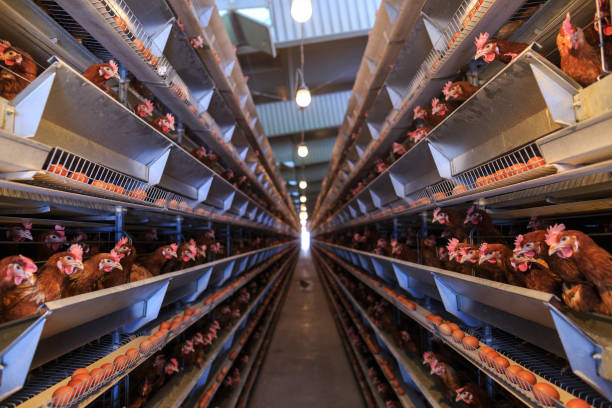
100,000 Layer Chicken Farm in Kenya with H-Type Layer Cage System
For a commercial poultry project with 100,000 laying hens in Kenya, the choice of cage system has a direct impact on stocking density, labor requirements, egg collection efficiency, manure management, and overall farm operation. For projects of this scale, the H-type layer cage system is a practical option because it is designed for high-density and automated layer farming.
LIVI Machinery provides H-type layer cage systems together with automatic feeding, drinking, egg collection, manure removal, ventilation, and environmental control equipment. These systems can be combined into a complete poultry farm solution according to the target capacity, chicken house size, and local project conditions.
Why Choose H-Type Layer Cages for 100,000 Layers in Kenya?
A 100,000-layer farm requires more than simply increasing the number of cages. The poultry house, cage layout, ventilation, feed supply, manure handling, and egg collection system must all be planned together.
H-type layer cages use a multi-tier structure that makes better use of vertical space inside the chicken house. Compared with lower-density cage arrangements, this allows more birds to be raised within the same building footprint.
For large commercial farms, this can help reduce land use and make centralized management easier.
LIVI H-type layer cage systems can be configured in different tier arrangements according to project requirements. The system can also be integrated with automated equipment so that routine farm operations require less manual work.
H-Type Layer Cage Configuration
For a 100,000-layer project, the final cage configuration depends on several factors, including chicken house dimensions, number of cage tiers, bird capacity per cage set, ventilation design, and aisle width.
LIVI H-type layer cages are available in multiple configurations. Depending on the model, the system can use different numbers of tiers and cage doors to achieve the required stocking capacity.
For a project of this size, the cage quantity should be calculated together with the poultry house layout. This helps ensure that the planned 100,000-bird capacity matches the available space and leaves enough room for feeding equipment, egg collection systems, manure belts, ventilation equipment, and service passages.
Learn more about the H-type layer chicken cage system.
Automatic Feeding System
Feeding 100,000 laying hens manually would require significant labor and make feed distribution difficult to control. An automatic feeding system can deliver feed from storage silos to the cage rows and distribute it along the feed troughs.
For H-type cage systems, feeding equipment can be installed on each cage row to provide uniform feed distribution.
A complete feeding system may include feed silos, conveying equipment, feeding machines, and control devices. The feeding amount can be adjusted according to management requirements.
Automatic feeding can help reduce repetitive labor and improve the consistency of daily feeding operations.
Automatic Drinking System
A stable drinking water system is essential for a large layer farm.
H-type layer cages can be equipped with nipple drinking lines installed inside the cage system. The drinking system can include pressure regulators, water pipes, nipple drinkers, water meters, and water supply control equipment.
For a 100,000-layer farm in Kenya, the water system should be designed according to the number of birds, water pressure, water source, and poultry house layout.
Reliable water delivery is particularly important in large farms because any interruption may affect a large number of birds at the same time.
Automatic Manure Removal System
Manure management is another important part of intensive layer farming.
H-type cage systems normally use manure belts installed underneath each cage tier. Chicken manure falls onto the belt and can be transported out of the poultry house regularly.
For a farm with 100,000 laying hens, this system can significantly reduce the amount of manual manure cleaning required.
Regular manure removal also helps keep the chicken house cleaner and makes environmental management easier.
The manure removal system should be planned together with the cage rows and external manure transportation area so that manure can be discharged efficiently from the poultry house.
Automatic Egg Collection System
A large layer farm produces a substantial number of eggs every day, so egg collection efficiency is an important consideration.
In an H-type cage system, eggs roll from the cage floor onto egg collection belts. These belts transport the eggs toward the end of the cage rows.
A central egg collection system can also be used to move eggs from multiple cage rows or poultry houses to a centralized collection area.
For a 100,000-layer farm, automatic egg collection can reduce manual handling and improve overall collection efficiency.
It can also make it easier to organize egg grading, packaging, and storage at a central location.
Environmental Control for Poultry Houses in Kenya
Ventilation and temperature control are especially important in high-density poultry houses.
The environmental control system can include exhaust fans, cooling pads, air inlets, lighting equipment, temperature sensors, humidity sensors, and intelligent control cabinets.
The required configuration depends on the climate of the project location in Kenya, chicken house dimensions, stocking density, and building insulation.
Because climate conditions vary between different regions of Kenya, the ventilation system should be calculated according to the actual farm location rather than using a fixed standard configuration.
A properly designed environmental control system helps maintain suitable air circulation and temperature inside the poultry house.
Poultry House Design for 100,000 Layers
A 100,000-layer farm does not necessarily need to place all birds in a single poultry house.
The total capacity can be divided among several houses according to the farm layout, land size, management strategy, and biosecurity requirements.
For example, the project can use several H-type layer houses, with each house designed for a specific capacity.
During the design stage, the following factors should be confirmed:
- Total bird capacity
- Number of poultry houses
- Chicken house length and width
- Number of cage rows
- Number of cage tiers
- Feeding system layout
- Egg collection direction
- Manure discharge direction
- Ventilation equipment
- Feed silo location
- Service roads and operation areas
A complete farm design can help avoid conflicts between equipment installation and building layout.
H-Type Layer Cage vs A-Type Layer Cage
Both H-type and A-type layer cages can be used for commercial egg production.
The A-type layer cage has a relatively simple structure and can be suitable for small and medium-sized layer farms.
For a 100,000-layer project, H-type cages are more commonly considered when the farm requires higher stocking density and a higher degree of automation.
The H-type system is designed for intensive farming and can integrate feeding, drinking, manure removal, egg collection, and environmental control systems into one complete production system.
Advantages of H-Type Layer Cage Systems
For a large layer project in Kenya, H-type cage systems can provide several operational advantages.
The multi-tier structure helps increase stocking density and improve the use of poultry house space.
Automatic feeding reduces the need for manual feed distribution.
Automatic drinking provides water directly to each cage section.
Manure belts reduce manual cleaning work.
Egg collection belts improve egg transportation efficiency.
Environmental control equipment helps manage temperature, ventilation, and air quality.
Together, these systems can make farm management more standardized and suitable for large-scale commercial egg production.
How to Plan a 100,000-Layer Project in Kenya
Before selecting equipment, it is important to confirm the basic project information.
The project planning process usually starts with the target capacity of 100,000 layers.
Next, the available land size and poultry house dimensions should be confirmed.
After that, the cage model and number of tiers can be selected.
The number of cage rows and cage sets can then be calculated based on the required bird capacity.
The feeding, drinking, manure removal, egg collection, and ventilation systems can be designed according to the cage layout.
Finally, the complete equipment configuration and quotation can be prepared.
This approach helps ensure that all systems match the farm capacity and building structure.
What Information Is Needed for a Quotation?
To prepare a suitable equipment proposal for a 100,000-layer farm in Kenya, the following information is useful:
- Project country and location
- Target capacity
- Available land dimensions
- Existing or planned chicken house dimensions
- Preferred number of cage tiers
- Required automation level
- Water supply conditions
- Electricity conditions
- Egg collection requirements
- Manure treatment requirements
Once this information is confirmed, LIVI can prepare a cage layout and equipment configuration for the project.
Why Choose LIVI Machinery?
LIVI Machinery provides poultry farming equipment and farm design solutions for commercial chicken projects.
The product range includes H-type layer cages, A-type layer cages, feeding systems, drinking systems, manure removal systems, egg collection systems, ventilation equipment, and environmental control systems.
For a large project such as a 100,000-layer farm in Kenya, LIVI can provide a complete solution based on the required capacity and poultry house conditions.
You can visit the LIVI Machinery homepage to learn more about available poultry farming equipment.
FAQ
Is an H-type layer cage suitable for 100,000 chickens?
Yes. H-type layer cage systems are designed for high-density commercial layer farming and can be used for large projects such as 100,000 laying hens.
How many H-type cages are needed for 100,000 layers?
The exact quantity depends on the cage model, number of tiers, birds per cage set, and poultry house layout.
Can the feeding system be automated?
Yes. Automatic feeding equipment can be integrated with H-type cage systems.
Can the system collect eggs automatically?
Yes. Egg collection belts and central egg collection systems can be included in the project.
Does the system include manure removal?
Yes. H-type layer cages can be equipped with automatic manure belt systems.
Can LIVI design the poultry house?
Yes. The poultry house layout can be designed according to the required capacity, cage arrangement, ventilation, and automation systems.
How can I get a quotation?
You can send your project information through the LIVI contact page and provide the target capacity, land size, chicken house dimensions, and required automation level.