
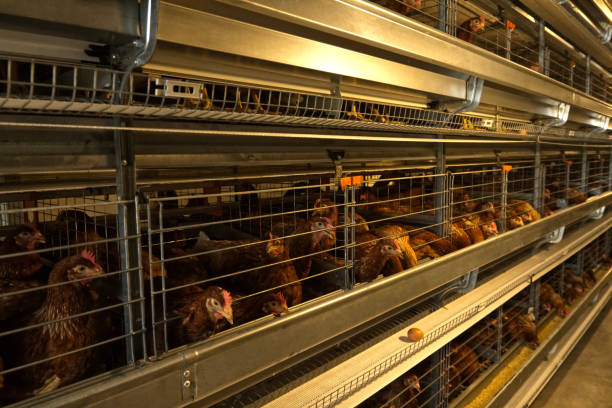
30,000 Layers H Type Layer Chicken Cage in Congo
For a 30,000-layer poultry farm in Congo, an H type layer chicken cage in Congo is a practical choice because it saves land, supports automatic feeding and egg collection, improves manure management, and helps farmers build a more efficient commercial egg production system. Compared with traditional floor raising or simple A type cages, the H type layer cage system is better suited for medium and large farms that want higher stocking density, cleaner houses, and easier daily management.
Congo’s climate is generally hot and humid, with strong rainfall patterns in many regions, so poultry house ventilation, manure drying, corrosion resistance, and stable water supply should be considered from the beginning of the project design. Livi Machinery can provide a complete 30,000-layer cage layout, equipment configuration, chicken house design, installation guidance, and after-sales support for farms in Congo.
Why Is an H Type Layer Chicken Cage Suitable for 30,000 Layers in Congo?
A 30,000-bird layer farm is already beyond the level of small backyard farming. The farmer needs a system that can reduce labor dependence, control disease risk, and make egg collection more efficient. The H type layer battery cage system is designed for this kind of intensive egg production.
For Congo, the main value of H type cages is not only high capacity. It is also about creating a cleaner, more controllable production environment. In humid regions, wet manure can increase ammonia, odor, fly problems, and disease pressure. H type cages with manure belts can remove manure regularly from each tier, helping keep the house drier and easier to manage.
According to Livi Machinery’s layer cage catalogue, H type layer equipment uses hot-dip galvanized cage mesh, automatic feeding, drinking, egg collection, manure removal, and environmental control systems. The cage design also uses a sloped bottom mesh to help eggs roll smoothly and reduce breakage.
What Equipment Is Included in a 30,000-Layer H Type Cage Project?
A complete 30,000-layer project should not only include cages. For stable egg production, the feeding, drinking, manure removal, egg collection, and ventilation systems must work together.
| System | Recommended Configuration | Main Function |
|---|---|---|
| H type layer cage | 4-tier or 5-tier layout, customized by house size | High-density layer raising and space saving |
| Automatic feeding system | Feed silo, conveyor, feeding trolley or chain feeding | Uniform feed distribution and lower labor cost |
| Automatic drinking system | Nipple drinkers, pressure regulator, waterline front end | Clean and stable water supply |
| Manure removal system | Belt manure removal for each cage tier | Reduce ammonia, odor, and wet manure problems |
| Egg collection system | Longitudinal egg belt and elevator egg collection | Lower egg breakage and faster collection |
| Ventilation system | Exhaust fans, air inlets, cooling pads, controller | Temperature and humidity control |
| Electrical control system | Manual, timing, and automatic control options | Easier farm operation and monitoring |
For a 30,000-layer farm, Livi Machinery usually recommends planning the house size, cage rows, walkway width, fan position, cooling pad area, and manure outlet before production. This avoids later problems such as narrow aisles, poor airflow, difficult manure discharge, or inconvenient egg transfer.
How Can the Cage Layout Be Designed for 30,000 Layers?
The final layout depends on the available land, chicken house width, local construction cost, and the farmer’s future expansion plan. For 30,000 layers, an H type cage design may use several cage rows inside one poultry house or divide the project into multiple houses for easier management.
A practical design may consider:
- Enough central and side walkways for workers and maintenance
- Proper distance between cage rows for air circulation
- Fan and cooling pad placement based on local wind direction
- A manure outlet that allows easy transport outside the house
- Egg collection position close to packing or storage area
- Space reserved for feed silo, water tank, generator, and medicine room
In Congo, where rainfall and humidity may be high in many farming areas, the chicken house should also have reliable drainage, good roof insulation, and corrosion-resistant materials. A raised foundation can help reduce waterlogging risk during rainy periods.
What Are the Benefits of Automation for Congo Layer Farms?
Labor cost and labor stability are important concerns for many commercial poultry investors. With 30,000 layers, manual feeding, manual egg collection, and manual manure cleaning require many workers and can lead to inconsistent management. Automation helps the farmer standardize daily operation.
Main benefits include:
- Lower labor intensity: Feeding, drinking, manure removal, and egg collection can be managed with fewer workers.
- More uniform feeding: Birds receive feed more evenly, supporting better flock uniformity.
- Cleaner poultry house: Regular belt manure removal helps reduce odor and ammonia.
- Lower egg breakage: Egg belts and buffer devices reduce collision during collection.
- Better production records: Automatic control makes daily management easier to track.
- Improved biosecurity: Less human contact with birds reduces unnecessary disturbance.
For farms planning to expand from 30,000 to 60,000 or 100,000 layers later, choosing automatic poultry cage equipment for large farms from the first stage can make future growth easier.
How Should Ventilation Be Planned for Congo’s Climate?
Ventilation is one of the most important parts of a successful layer project in Congo. High temperature and humidity can reduce feed intake, affect laying performance, and increase stress in birds. A well-designed ventilation system should remove heat, moisture, dust, and harmful gases while keeping fresh air moving evenly through the cage rows.
For a 30,000-layer H type cage house, Livi Machinery can design:
- Exhaust fans for negative pressure ventilation
- Side wall air inlets for controlled fresh air entry
- Cooling pads for hot seasons
- Environmental controller for temperature and humidity management
- Lighting system for stable laying performance
The goal is not simply to install more fans. The key is matching fan capacity, air inlet size, house length, cage height, and bird density. Poorly matched ventilation can create dead zones, uneven temperature, and high humidity around cages.
What Makes Livi Machinery a Reliable Partner for This Project?
A poultry cage project is not only an equipment purchase. It is a production system. If the cage size, house layout, feeding system, ventilation, and manure removal are not coordinated, the farm may face high operating costs after installation.
Livi Machinery supports Congo customers with:
- Free poultry house layout design
- Cage model selection according to bird quantity and land size
- Automatic feeding, drinking, manure removal, and egg collection configuration
- Ventilation and environmental control planning
- Equipment manufacturing and quality inspection
- Shipping arrangement and packing guidance
- Installation drawings, videos, and engineer guidance when needed
- After-sales support for operation and maintenance
For a 30,000-layer project, this one-stop design process helps investors estimate equipment requirements more clearly and reduce mistakes before construction begins.
Suggested 30,000-Layer Project Configuration
| Project Item | Suggested Plan |
|---|---|
| Country | Congo |
| Bird capacity | 30,000 laying hens |
| Cage type | H type layer chicken cage |
| Automation level | Feeding, drinking, manure removal, egg collection, ventilation control |
| Suitable customer | Medium-size egg farm, expanding farm, commercial poultry investor |
| Main design focus | Land saving, heat control, manure dryness, low labor operation |
| Expansion option | Reserve land and equipment interface for future capacity increase |
This configuration is suitable for farmers who want to move from semi-manual farming to a more commercial egg production model. It is also useful for investors who want a cleaner and more standardized farm image for long-term operation.
FAQ
1. Is an H type layer cage suitable for 30,000 chickens in Congo?
Yes. For 30,000 layers, an H type cage is suitable because it offers higher stocking density, automatic manure removal, automatic feeding, and efficient egg collection. It is especially useful when land is limited or labor management is difficult.
2. How many workers are needed for a 30,000-layer automatic cage farm?
The number depends on automation level and farm management style. With automatic feeding, drinking, manure removal, and egg collection, the farm can operate with fewer workers than a manual system. Workers mainly handle inspection, egg packing, equipment checking, and bird health management.
3. Can Livi Machinery design the chicken house for Congo customers?
Yes. Livi Machinery can provide poultry house layout design based on land size, bird quantity, cage model, climate conditions, and expansion plan. The design can include cage layout, ventilation, manure outlet, egg collection route, and equipment placement.
4. Why is manure removal important in Congo’s humid climate?
In humid conditions, manure can become wet more easily, causing odor, ammonia, flies, and disease pressure. An automatic manure belt system helps remove manure regularly and keeps the poultry house cleaner.
5. Can the 30,000-layer farm be expanded later?
Yes. If expansion is considered during the first design stage, the farm can reserve land, power capacity, feed storage space, and future cage house positions. This makes later expansion more efficient and less costly.
Final CTA
Planning to build a 30,000-layer H type cage farm in Congo? Contact Livi Machinery to get a free poultry house layout, equipment configuration, and customized quotation. Our team can help you design a practical layer chicken cage solution for Congo’s climate, land conditions, labor situation, and future expansion plan.